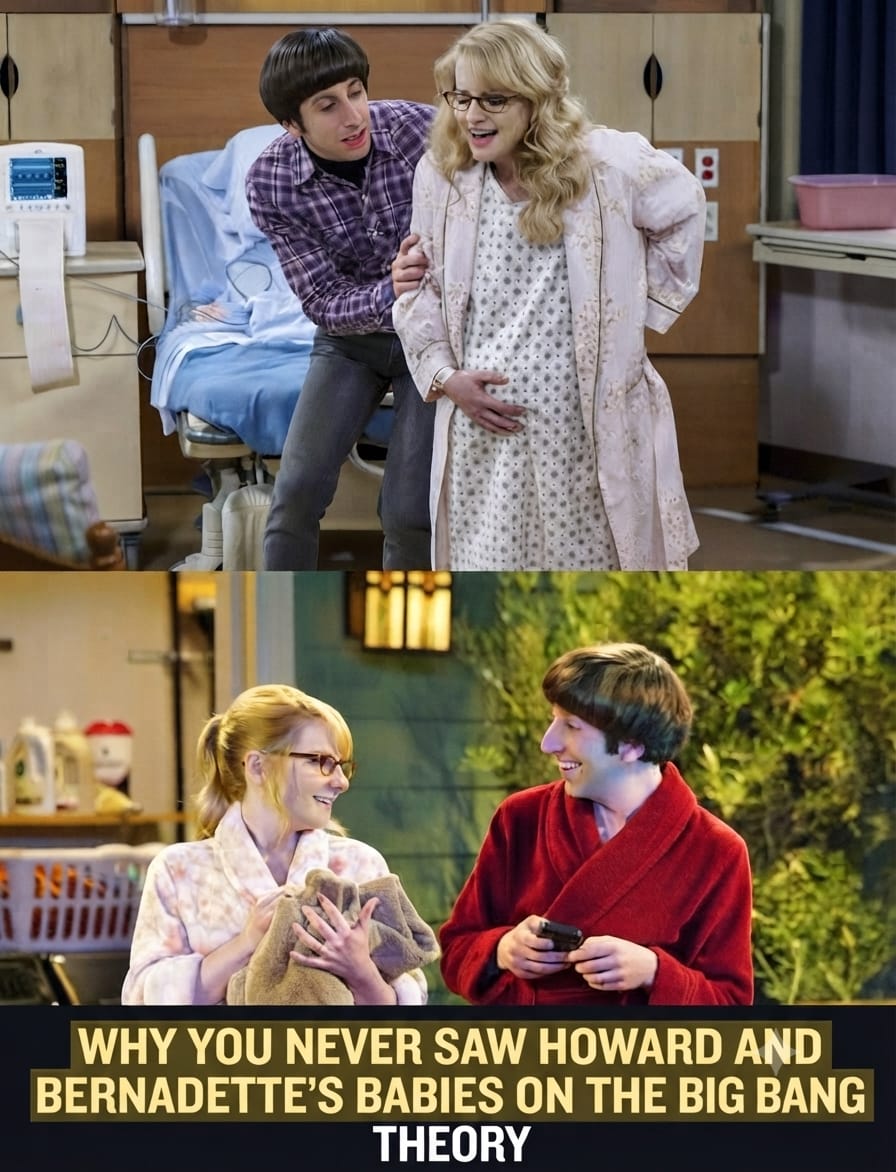
Over its twelve-season run, The Big Bang Theory followed its characters through some major life milestones.
They earned doctorates, got married, won Nobel Prizes, and even started families.
One of the biggest changes came when Howard Wolowitz and Bernadette Rostenkowski-Wolowitz welcomed two children, Halley and Michael.
Yet despite their importance to the couple's story, fans may have noticed something unusual:
The babies were almost never seen on screen.
It wasn't an accident. It was a deliberate creative choice by the show's producers.
The Children Existed Mostly Off-Screen
After Halley was born in Season 10 and Michael followed in Season 11, the children became an important part of Howard and Bernadette's lives.
The characters frequently talked about them.
Storylines revolved around parenting challenges, sleepless nights, daycare concerns, and balancing family life with careers.
However, viewers rarely got a clear look at either child.
Most of the time, the babies were heard off-screen, mentioned in conversations, or hidden inside strollers and cribs.
The audience knew they were there without actually seeing them.
A Classic Sitcom Technique
The decision wasn't unique to The Big Bang Theory.
Television history is filled with examples of characters who were rarely—or never—shown despite being important to the story.
By keeping certain characters off-screen, writers allow viewers to focus on the main cast while still expanding the fictional world.
For The Big Bang Theory, the central focus was always the relationships between Sheldon, Leonard, Penny, Howard, Raj, Amy, Bernadette, and the rest of the group.
The children supported those stories rather than becoming the stories themselves.
Keeping the Spotlight on the Adults
One of the biggest reasons for the choice was narrative focus.
The show was built around adult friendships, relationships, and careers.
Introducing young children into scenes regularly would have changed the rhythm of the sitcom.
Instead of centering episodes around parenting, the writers preferred to explore how becoming parents affected Howard and Bernadette.
This approach allowed the series to maintain its established tone while still showing character growth.
The audience could see the impact of family life without shifting the show's focus away from its core ensemble.
The Comedy Worked Better This Way
Interestingly, many of the jokes involving Howard and Bernadette's children worked precisely because the kids remained off-screen.
Viewers often heard crying from another room or listened to exhausted parents describe chaotic situations.
The humor came from the reactions of Howard and Bernadette rather than from the children themselves.
This style allowed audiences to imagine the mayhem, which often made the jokes even funnier.
Sometimes what viewers don't see can be more effective than what they do.
A Practical Production Decision
There were also practical advantages.
Working with infants on television productions can be challenging due to limited filming hours, scheduling restrictions, and production logistics.
By keeping Halley and Michael largely off-screen, the show avoided those complications while still incorporating the children into storylines.
The writers gained flexibility without sacrificing the realism of Howard and Bernadette's family life.
Fans Still Connected With the Family
Even though the children were rarely shown, fans still felt connected to them.
That's because the audience experienced parenthood through Howard and Bernadette's perspective.
Viewers watched them struggle with sleepless nights, celebrate milestones, and adapt to the responsibilities of raising a family.
The emotional impact came from the parents rather than the children themselves.
As a result, the family dynamic felt genuine without requiring constant appearances from the kids.


No comments yet