How "Soft Kitty" Became One of The Big Bang Theory's Biggest Legal Problems
Few recurring jokes in The Big Bang Theory became as instantly recognizable as "Soft Kitty." What began as a simple lullaby Sheldon Cooper demanded whenever he was sick eventually became merchandise, fan art, covers and one of the show's most recognizable traditions.
But behind the adorable song was a surprisingly complicated copyright dispute.
In 2015, "Soft Kitty" became the center of a federal lawsuit that involved the heirs of a woman who had written the original poem decades before The Big Bang Theory existed.
And the legal battle revealed that the song's history stretched back much further than Sheldon Cooper.
Sheldon Introduced the World to "Soft Kitty"
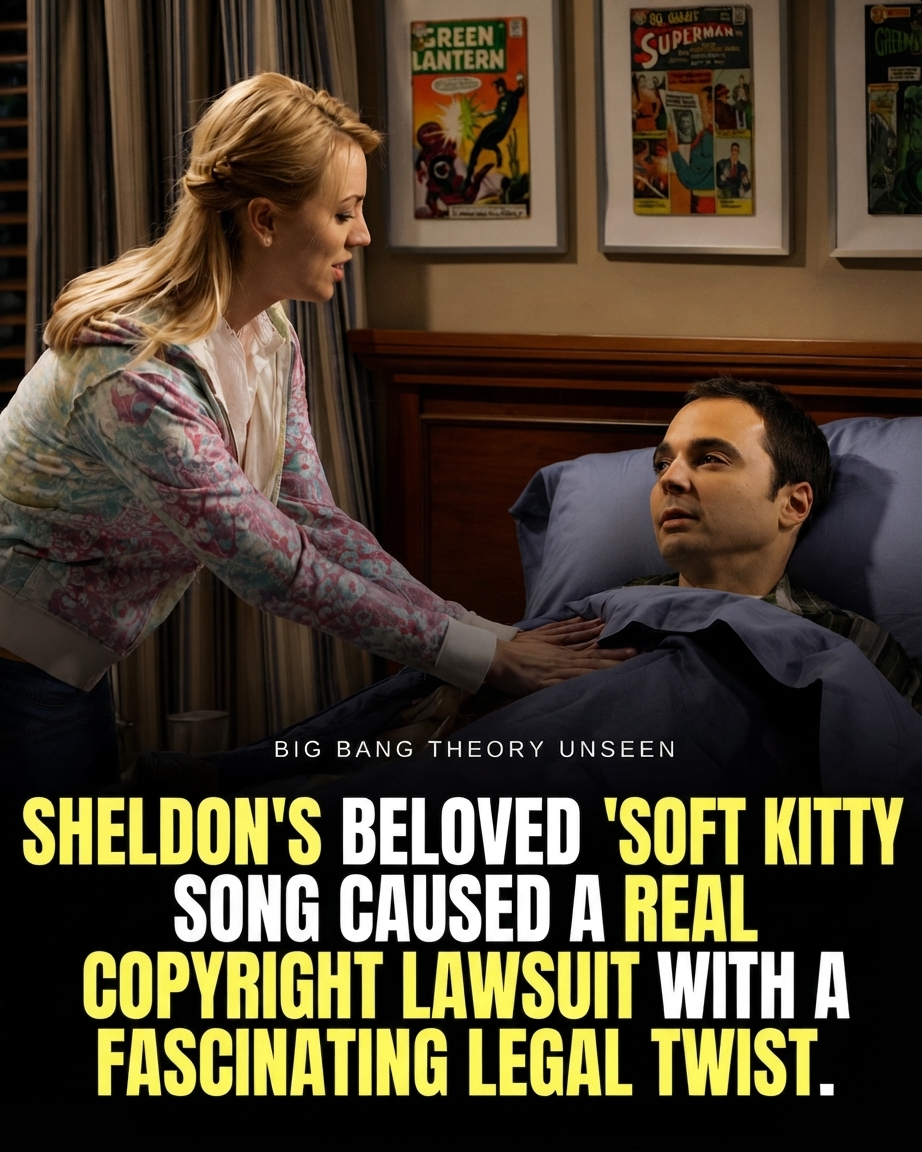
The song first appeared during Season 1 in "The Pancake Batter Anomaly."
Sheldon was sick.
And, as usual, Sheldon had very specific requirements for how he wanted to be cared for.
Penny was eventually persuaded to sing him "Soft Kitty."
The moment was simple.
It was funny.
And it immediately established another one of Sheldon's bizarrely specific comfort rituals.
Nobody could have predicted how famous the little song would become.
"Soft Kitty" Became a Big Bang Theory Tradition
Over the show's twelve-season run, "Soft Kitty" returned whenever Sheldon was sick, stressed or in need of comfort.
The joke worked because it revealed a softer side of a character who was otherwise obsessed with logic, routines and scientific reasoning.
Sheldon could spend an entire episode arguing about physics.
But when he was sick?
He wanted his "Soft Kitty."
The song eventually became one of the most recognizable pieces of The Big Bang Theory merchandise and fandom.
Fans created their own versions.
The song appeared in different variations.
And it became so closely associated with Sheldon that hearing the first words was enough for viewers to know exactly what was coming.
Then Came the Lawsuit
In December 2015, the heirs of Edith Newlin filed a federal copyright lawsuit against Warner Bros., CBS, Chuck Lorre Productions and other parties connected to the show.
Newlin had written a poem called "Warm Kitty" in 1930.
The poem was later published in a 1937 songbook titled Songs for the Nursery School.
The plaintiffs argued that the lyrics used in "Soft Kitty" were based on Newlin's work and that her estate should have received permission and compensation.
Suddenly, one of Sheldon's cutest recurring jokes had become the subject of a serious legal dispute.
The Case Came Down to Copyright Ownership
The legal argument became surprisingly complicated.
The plaintiffs pointed to a 1964 copyright renewal involving Willis Music.
They argued that the renewal also preserved Newlin's copyright interest in the lyrics and that Willis Music therefore could not independently license the material to Warner Bros. without permission from Newlin's heirs.
The defendants disputed that interpretation.
The question wasn't simply whether the lyrics existed before The Big Bang Theory.
It was about who legally controlled the copyright.
The Court Rejected the Plaintiffs' Argument
In March 2017, U.S. District Judge Naomi Reice Buchwald dismissed the lawsuit.
The court essentially found that the plaintiffs' position created a contradiction.
If Newlin had transferred the relevant copyright interest to Willis Music when she wrote the poem, then her heirs could not later claim ownership.
If she had retained the copyright, then Willis Music would not have had the authority the plaintiffs claimed it possessed.
The court therefore rejected the estate's argument.
The lawsuit was over.
"Soft Kitty" had survived its legal battle.
But the Story Didn't End There
Perhaps the most fascinating detail is what happened afterward.
Despite the song's enormous popularity, "Soft Kitty" reportedly appeared only once more across The Big Bang Theory and Young Sheldon after the legal dispute concluded.
For something that had once been one of the show's most reliable recurring jokes, that was a surprisingly quiet ending.
Whether the legal controversy influenced the decision or simply coincided with the writers moving away from the gag, the song never returned to its earlier frequency.
The Melody Was Even Older
And here's where the story becomes even more fascinating.
The history of the tune itself didn't begin with Edith Newlin.
The melody associated with "Warm Kitty" has been traced to a much older Polish lullaby, "Wlazł kotek na płotek."
The tune was documented in the 19th century, with folklorist Oskar Kolberg recording it in the 1830s.
That means the little melody Sheldon sang while sitting in his pajamas had roots stretching back almost two centuries.
From Polish Folklore to Pasadena
Think about how extraordinary the journey is.
A traditional Polish melody from the 19th century.
A poem written by an American nursery school teacher in 1930.
A published children's songbook from the 1930s.
And decades later, a fictional physicist named Sheldon Cooper singing a variation of it on a CBS sitcom.
Somehow, all of those pieces eventually became part of one of television's most recognizable running jokes.
Final Thoughts
"Soft Kitty" was never supposed to become a complicated piece of television history.
It was just a silly little song.
A sick Sheldon wanted comfort.
Penny sang.
The audience laughed.
And the writers kept bringing it back.
But behind that simple joke was a chain of ownership disputes, copyright arguments and centuries of musical history.


No comments yet