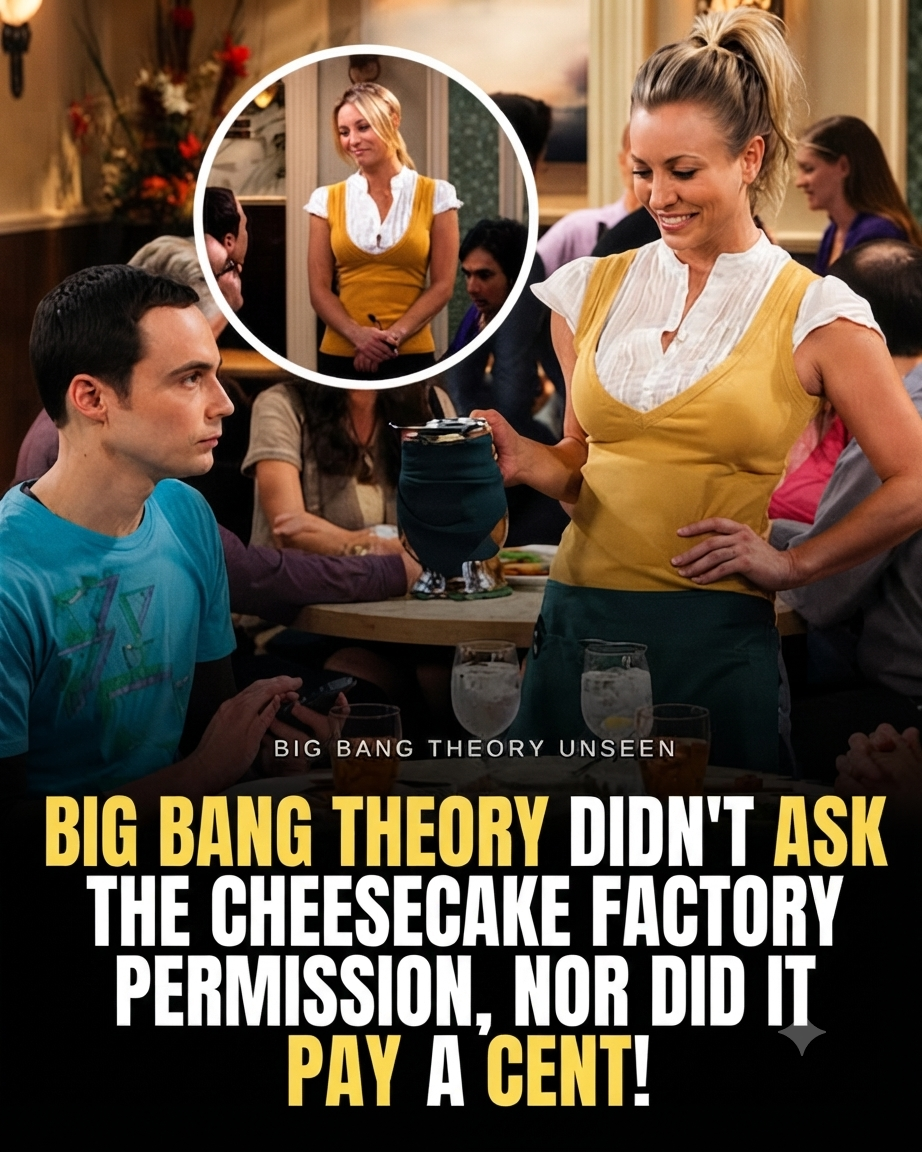
One of the biggest behind-the-scenes surprises from The Big Bang Theory isn't about the cast or the scripts—it's about a restaurant that became one of the sitcom's most recognizable settings without ever signing a sponsorship deal.
For millions of viewers, Penny's job at The Cheesecake Factory was as iconic as Apartment 4A or Sheldon's favorite spot on the couch.
Countless memorable conversations, relationship milestones, and comedic moments unfolded inside the restaurant throughout the series' twelve-season run. Because the restaurant appeared so frequently, many fans naturally assumed it was part of a paid promotional partnership.
The truth is much more surprising.
According to the company itself, The Cheesecake Factory never paid a single dollar to appear on the show—and Warner Bros. never even asked for permission to use the restaurant's name.
Penny's Workplace Became a Signature Part of the Series
From the very beginning of The Big Bang Theory, Penny worked as a waitress at The Cheesecake Factory while pursuing her dream of becoming an actress.
The restaurant quickly became one of the show's most frequently used recurring locations.
It wasn't just a workplace.
It was where Leonard and Penny shared important conversations, where Sheldon regularly ordered food, where friendships developed, and where many of the sitcom's funniest scenes unfolded.
Over twelve seasons, viewers saw the restaurant so often that it became inseparable from Penny's character.
That constant exposure made many people assume the chain must have been financially involved.
It wasn't.
There Was No Sponsorship Agreement
Despite years of prominent visibility on one of television's highest-rated comedies, The Cheesecake Factory had no official agreement with the production.
A spokesperson for the restaurant chain later confirmed:
"The Cheesecake Factory does not have any sort of arrangements with the show."
Even more surprising, company founder and CEO David Overton revealed that Warner Bros. never requested permission before using the restaurant's name.
The company also confirmed it never paid for the repeated exposure.
Unlike many modern television productions that feature carefully negotiated product placements, this wasn't a commercial partnership.
It simply became part of the fictional world the writers wanted to create.
Millions of Dollars in Exposure—For Free
The timing couldn't have been better for the restaurant chain.
At its peak, The Big Bang Theory attracted around 20 million viewers per week, making it one of the most-watched sitcoms on American television.
Every appearance of The Cheesecake Factory placed the brand in front of an enormous audience without requiring the company to purchase advertising time.
Ironically, this aligned perfectly with the restaurant's own business philosophy.
Rather than relying heavily on expensive advertising campaigns, The Cheesecake Factory has long preferred to build its reputation through customer experiences, word of mouth, and social media.
The sitcom essentially provided years of nationwide brand exposure at absolutely no cost.
It's difficult to imagine a marketing campaign delivering greater visibility for less investment.
The Restaurant on TV Wasn't Actually Accurate
Although the show's writers used the restaurant's name, the on-screen version wasn't designed to faithfully recreate a real Cheesecake Factory location.
In fact, several noticeable differences existed.
The waitress uniforms worn by Penny bore little resemblance to the uniforms worn by actual employees.
The restaurant's interior décor was completely different from real Cheesecake Factory locations.
The layout was simplified for television production, and the fictional restaurant even featured elements—such as a performance stage—that most real locations don't have.
The set was created to serve the needs of the sitcom rather than function as an exact replica.
For most viewers, however, those differences went unnoticed because the focus remained on the characters rather than the restaurant itself.
Why the Writers Chose The Cheesecake Factory
While the production has never suggested the restaurant was chosen for commercial reasons, it proved to be a practical storytelling location.
Having Penny work at a recognizable casual dining chain gave the writers a believable setting where multiple characters could naturally meet throughout the series.
Instead of constantly inventing reasons for everyone to gather, Leonard, Sheldon, Howard, Raj, and the others simply visited Penny at work.
The restaurant became an extension of the show's social world, creating opportunities for both comedy and character development.
Its familiarity also helped ground the series in a recognizable version of everyday life.
An Unintentional Marketing Success Story
In today's television landscape, product placement deals often involve detailed contracts, licensing agreements, and significant financial investments.
The Cheesecake Factory's relationship with The Big Bang Theory was the complete opposite.
There were no sponsorship negotiations.
No advertising payments.
No promotional obligations.
Yet the restaurant still became one of the most recognizable recurring locations in one of television's biggest sitcoms.
Few brands have ever received so much exposure without actively seeking it.
It's a rare example of how organic storytelling can sometimes create marketing value that money simply can't buy.
No comments yet