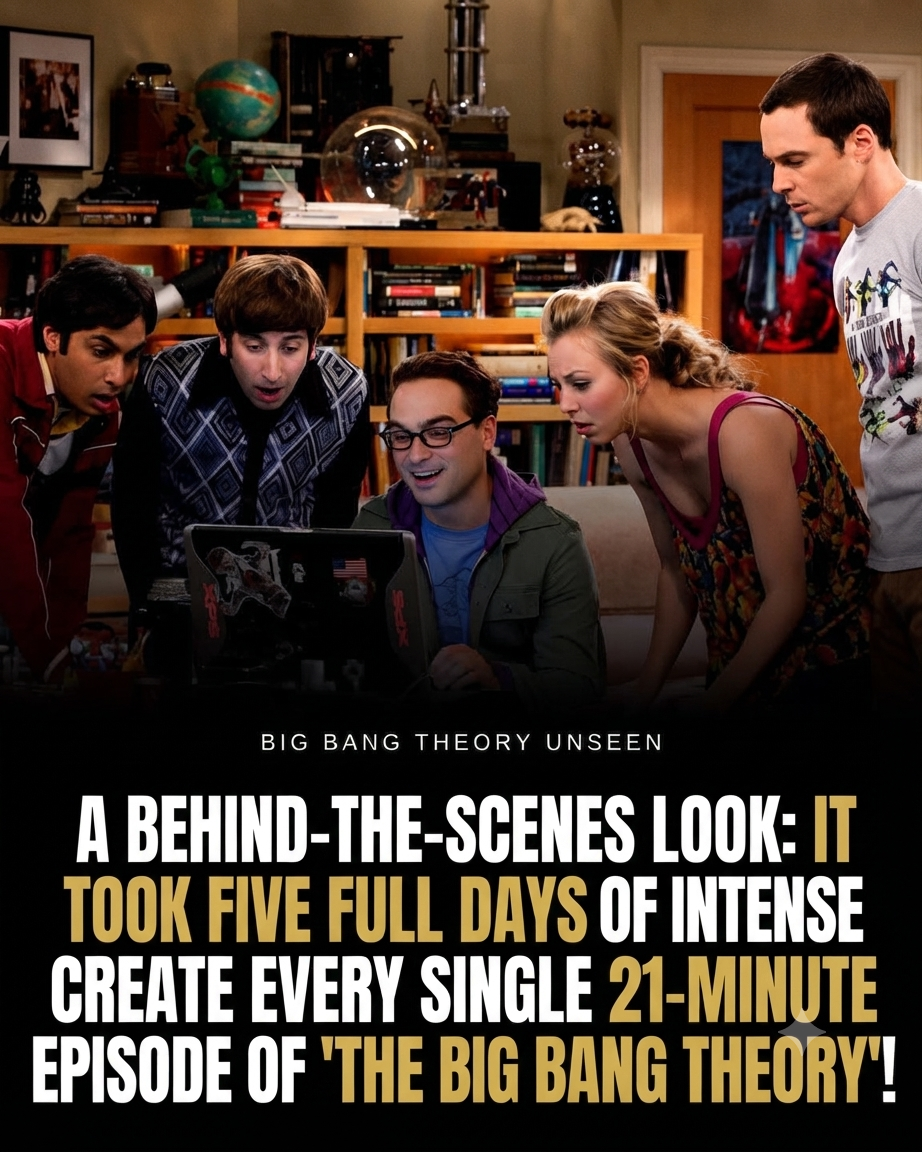
One of the biggest behind-the-scenes revelations about The Big Bang Theory isn't about the cast—it's about the incredible amount of work required to create a single 21-minute episode.
To viewers at home, each episode felt effortless, packed with perfectly timed jokes and natural performances.
Behind the scenes, however, every episode followed an intense five-day production schedule that involved constant rehearsals, script rewrites, and live performances.
Five Days to Create One Episode
Unlike many television series, The Big Bang Theory followed a traditional multi-camera sitcom format.
Each episode was developed over five days before being performed in front of a live studio audience.
As one cast member explained:
"On a sitcom, we have five days to work on an episode until we tape it. In our case, we record with four cameras in front of a live studio audience."
Those five days weren't simply about memorizing lines.
The cast carefully rehearsed every movement, every entrance, and every joke to ensure the final performance flowed naturally.
Every Day Ended With a Full Performance
At the conclusion of each rehearsal day, the actors performed the entire episode from beginning to end for the show's writers and producers.
The cast member described the process this way:
"We decide who stands where, who walks where, and we perform the episode in its entirety, in order, for our writers and producers at the end of every work day."
These daily run-throughs allowed the creative team to evaluate what worked—and what didn't.
The Script Was Always Changing
One of the most surprising aspects of production was how often the scripts evolved throughout the week.
Following each rehearsal, the writers reviewed audience reactions, pacing, and dialogue before making adjustments overnight.
According to the cast member:
"They then make changes to the script based on those run-throughs and we get a new script the next day. Sometimes the script changes drastically, but mostly it's just jokes here and there that shift."
Even small changes could improve a punchline or strengthen a scene before the final taping.
Rehearsals Had Another Important Purpose
The rehearsal week wasn't only about perfecting the script.
It also gave the cast time to stop laughing.
Many of the show's funniest moments made the actors break character during early rehearsals, so repeated run-throughs helped everyone maintain composure before the live audience arrived.
As the cast member joked:
"We also use this week to get the giggles out so that when the audience comes in, we are all ready to be professional. For the most part."
It's a reminder that even experienced actors couldn't always keep a straight face around such a talented ensemble.


No comments yet