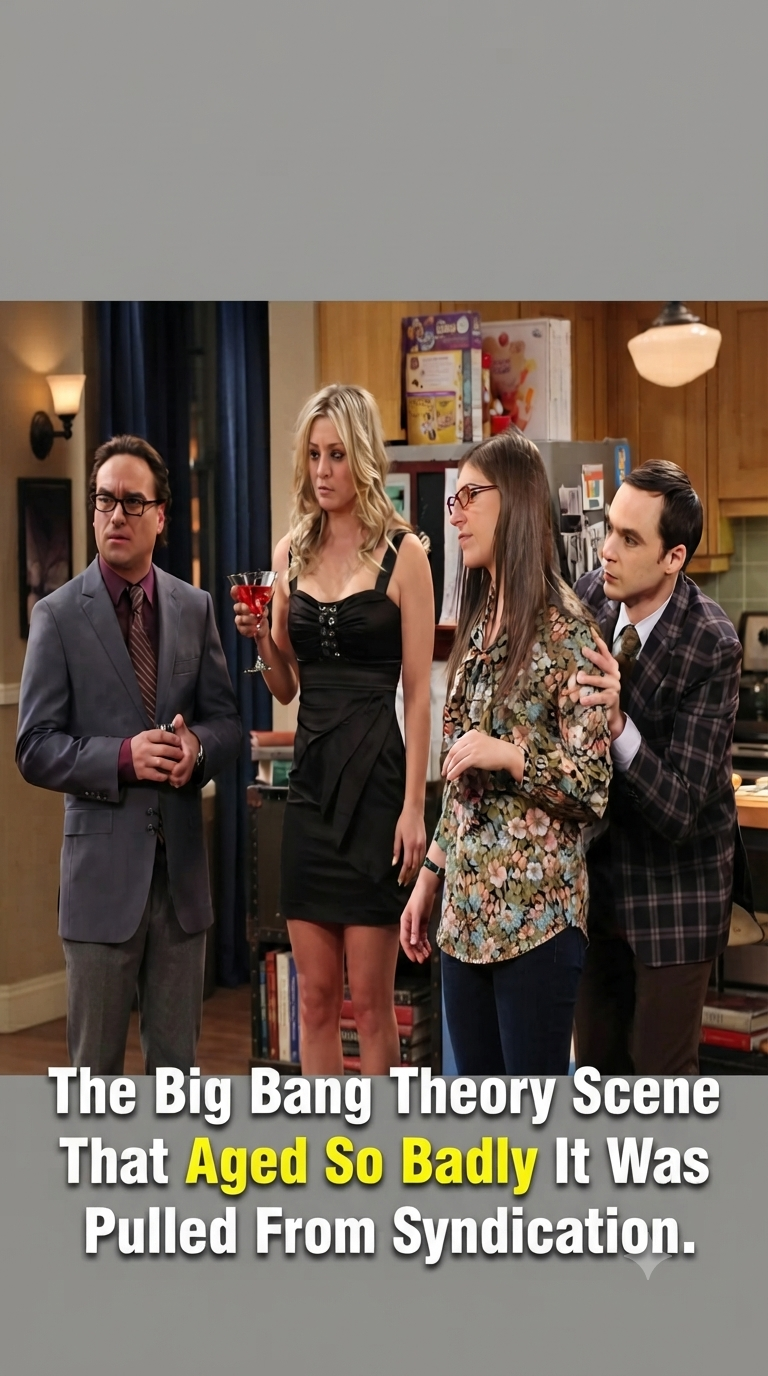
Television comedy is often a reflection of the time in which it was created.
Jokes that audiences laughed at in one era can feel very different years later as cultural attitudes evolve. Few long-running sitcoms demonstrate this reality more clearly than The Big Bang Theory.
Over twelve seasons, the series produced hundreds of episodes and thousands of jokes. While most remain popular with fans, a handful of scenes have faced criticism in retrospect.
One particular early-season moment has generated years of discussion among viewers, with reports that it was edited or omitted in certain syndicated broadcasts because of concerns about how it would be received by modern audiences.
A Different Television Era
When The Big Bang Theory premiered in 2007, television comedy operated under different expectations than it does today.
Many sitcoms relied on humor that pushed boundaries, used stereotypes, or explored sensitive topics in ways that would likely receive greater scrutiny if written now.
Like many shows from the period, The Big Bang Theory occasionally included jokes that reflected those broader industry trends.
Years later, some of those moments have become the subject of renewed discussion.
Why Certain Scenes Draw Criticism
The scenes most frequently criticized by modern viewers typically involve jokes about gender roles, social awkwardness, appearance, or cultural stereotypes.
What was originally written as broad sitcom humor is sometimes viewed differently by contemporary audiences.
Critics argue that certain jokes can feel insensitive or outdated when revisited today.
Supporters, meanwhile, often note that sitcom characters are intentionally flawed and that many controversial remarks were meant to highlight those flaws rather than endorse them.
The debate illustrates how audience expectations continue to evolve.
The Challenges of Syndication
When television series enter syndication, episodes are often edited for time, content standards, or scheduling requirements.
As a result, certain scenes may be shortened, altered, or removed in some broadcast versions.
These edits do not necessarily indicate an official ban or permanent removal.
Instead, local broadcasters and distributors sometimes make adjustments based on audience expectations or programming needs.
This has contributed to ongoing confusion about which Big Bang Theory scenes have been modified and why.
How Fans View the Issue Today
The discussion surrounding older sitcom jokes has become increasingly common across television history.
Shows from every era are regularly reexamined through modern perspectives.
For many fans, these conversations are part of understanding how entertainment evolves over time.
Others prefer to view older episodes within the cultural context in which they were originally produced.
Neither perspective has completely ended the debate, which is one reason the topic continues to attract attention years after the series finale.
A Legacy Bigger Than One Scene
Despite occasional controversies, The Big Bang Theory remains one of the most successful sitcoms ever produced.
The show ran for twelve seasons, earned multiple awards, and introduced millions of viewers to characters who became household names.
A small number of disputed jokes have done little to diminish its overall popularity.
Instead, they have become part of a broader conversation about how comedy changes across generations.
Final Thoughts
The Big Bang Theory scene often described as having "aged badly" serves as a reminder that television is constantly judged through the lens of its audience.
What one generation finds funny, another may question.
Whether viewers see the controversy as evidence of changing standards or simply the natural evolution of comedy, the discussion highlights the lasting cultural impact of a sitcom that continues to be watched around the world.
More than a decade after many of its early episodes aired, The Big Bang Theory is still generating conversations—and that may be one of the clearest signs of its enduring legacy.
No comments yet