For a television show that ran for twelve seasons and 279 episodes, The Big Bang Theory could easily have become the kind of series that simply kept going because everyone involved knew there was still enormous money and audience interest attached to it.
Instead, the show ended in 2019.
For fans, the finale was emotional.
For the cast, it represented the conclusion of a huge chapter of their lives.
But how did the actors themselves actually feel about stopping?
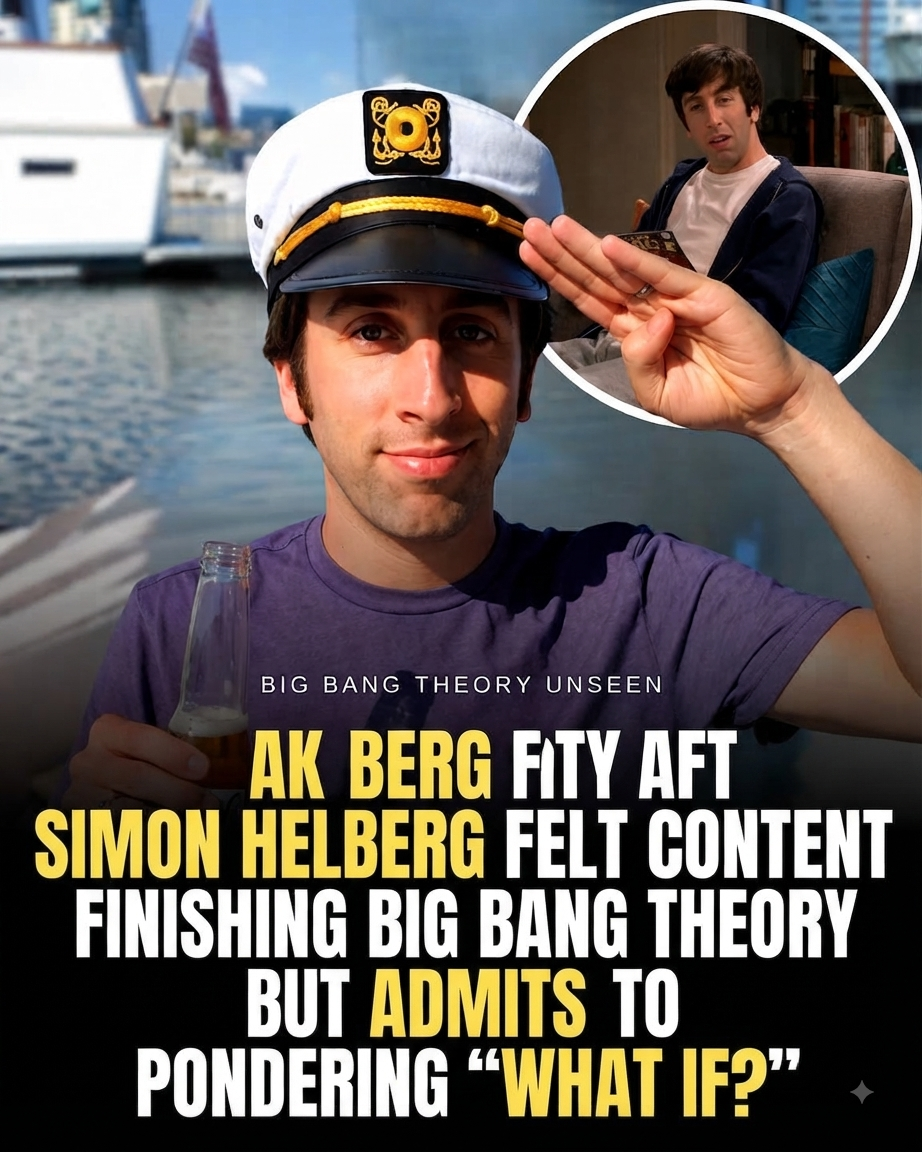
Simon Helberg, who spent twelve seasons playing Howard Wolowitz, recently offered one of the clearest answers.
During a June 2026 appearance on Jesse Tyler Ferguson's Dinner's On Me podcast, Helberg reflected on the decision to end The Big Bang Theory and admitted that, while he occasionally wonders what might have happened if the show had continued, he ultimately felt completely satisfied with where it ended.
"No, I felt very, very content ending at that point," Helberg explained.
That simple statement says a lot about the complicated emotions surrounding the end of one of television's biggest sitcoms.
Twelve Seasons Was Enough for Simon Helberg
For actors who spend more than a decade playing the same character, leaving a successful television series can be an incredibly difficult decision.
There is the financial security.
There is the familiarity of working with the same people.
There is the comfort of knowing exactly what your professional life looks like every week.
And then there is the fear of wondering whether anything else will ever reach the same level of success.
For Helberg, however, ending The Big Bang Theory didn't feel like walking away from something unfinished.
It felt natural.
He explained that the circumstances surrounding the show's conclusion also influenced how he viewed the decision.
According to Helberg, the cast wasn't initially sitting around knowing that Season 12 would definitely be the end.
The possibility of continuing existed.
But as the season progressed, conversations about the show's future changed.
The end eventually became reality.
And Helberg was ready for it.
"It Was Sort of a Natural Ending"
One of the most interesting parts of Helberg's reflection is that he doesn't describe the ending as something the cast necessarily planned years in advance.
Instead, he described it as something that naturally developed.
He explained that the show wasn't renewed or picked up for additional seasons at first, and discussions about doing more episodes only really began toward the end of the final season.
That distinction matters.
There is a major difference between a cast knowing from the beginning of a season that they are filming their final episodes and discovering near the end that the story may actually be finished.
For Helberg, the latter helped make the conclusion feel organic.
The show had reached a point where the characters had changed enormously from where they started.
Howard was married.
He was a father.
The man who had once been defined largely by inappropriate behavior and an obsession with women had become one of the show's most surprisingly mature characters.
The larger group had also evolved.
What began as a story about four socially awkward scientists and the woman who moved in across the hall had become something much broader.
The characters had created families, careers, relationships, and a genuine community.
There was a natural sense that the story had reached its destination.
But Helberg Still Thinks About the "What If"
Being satisfied with the ending doesn't mean never wondering about the alternative.
Helberg admitted that he occasionally thinks about whether he and his castmates "should have just done more" of the show.
It's an incredibly relatable feeling.
Even when someone knows a decision was right, curiosity about the road not taken doesn't necessarily disappear.
What would Howard have been doing in Season 13?
Would the characters have continued to change?
Would the writers have found new storylines?
Would the show have remained as popular?
Would another two or three seasons have made the series better — or eventually weakened what made it special?
Those questions can never really be answered.
And perhaps that's part of what makes long-running television so fascinating.
Once a show ends, an entire collection of possible stories disappears with it.
Nearly Two Decades Have Passed
Helberg also reflected on the strange experience of realizing how much time has passed since The Big Bang Theory first premiered.
The series debuted in 2007.
For many viewers, that doesn't necessarily feel like such a long time ago.
But for the people who lived through the production, the passage of time is much harder to ignore.
Helberg described the experience as almost surreal, observing that as people get older, they suddenly realize that something they remember vividly happened decades ago.
It's especially striking when applied to The Big Bang Theory.
The show premiered when smartphones were still becoming mainstream.
Social media looked completely different.
Streaming television was nowhere near what it is today.
And the actors who would eventually become some of the highest-paid performers on television were still at the beginning of what would become an extraordinary twelve-year journey.
Today, the show belongs to television history.
Howard Wolowitz Changed More Than Almost Anyone
Helberg's reflections are particularly interesting because Howard underwent one of the show's most dramatic transformations.
When audiences first met him, Howard was deliberately difficult to like.
He was arrogant.
He frequently made inappropriate comments toward women.
He treated his friendships in immature ways.
And his attempts to impress women were often uncomfortable even by sitcom standards.
But the show eventually gave Howard something he desperately needed:
growth.
His relationship with Bernadette transformed him.
Marriage forced him to become more responsible.
Fatherhood changed his priorities.
And his friendships became less about competition and more about genuine loyalty.
The result was one of the show's most satisfying character arcs.
Helberg Admits the Early Howard Episodes Haven't Aged Well
In a separate appearance on The Official Big Bang Theory Podcast in May 2026, Helberg spoke more directly about Howard's early behavior.
He acknowledged that some of those early seasons "haven't aged well."
That's an important observation from someone who knows the character better than almost anyone.
Comedy changes.
Cultural expectations change.
What audiences found outrageous or funny in 2007 can land very differently years later.
Howard's early behavior toward women is one of the clearest examples.
The character was intentionally written to be inappropriate, but modern viewers are often more critical of some of those storylines than audiences were when they originally aired.
Helberg himself appears to recognize that difference.
He Doesn't Want His Daughter Meeting Early Howard Too Soon
Perhaps the funniest example of Helberg's awareness of Howard's evolution involves his own daughter, Adeline.
Helberg has encouraged her to begin watching The Big Bang Theory only once Howard's relationship with Bernadette is established.
That says almost everything about how dramatically the character changed.
There is a version of Howard that Helberg is comfortable showing his daughter.
And then there is the early version.
The Howard who eventually becomes a loving husband and father is a very different person from the man viewers meet in the first season.
In a strange way, Helberg's decision creates its own unofficial viewing guide:
Wait until Howard grows up.
Bernadette Was the Turning Point
Melissa Rauch's Bernadette became one of the most important characters in Howard's development.
Before Bernadette, Howard's romantic life was mostly defined by insecurity and inappropriate behavior.
With Bernadette, he finally encountered someone who wouldn't simply tolerate his personality.
She challenged him.
She called him out.
She expected him to grow.
And eventually, he did.
Their relationship gave Howard something the character had been missing since the beginning: a reason to become better.
The transformation wasn't instant.
Howard still made mistakes.
He still behaved like Howard.
But the difference was that he began understanding that his actions had consequences.
That development made his eventual marriage and fatherhood feel earned rather than simply written into the character's story.
The Ending Gave Howard a Full Circle
By the time The Big Bang Theory reached its final season, Howard was almost unrecognizable compared with the character introduced in 2007.
He had become a husband.
A father.
An astronaut who had actually gone into space.
A loyal friend.
And a man who had developed a much healthier understanding of himself and the people around him.
That makes Helberg's satisfaction with the ending particularly understandable.
Howard's story had somewhere meaningful to land.
The show didn't simply stop while the characters were still waiting to become the people they were supposed to be.
They had already changed.
They had already grown.
And the finale allowed them to continue their lives without needing to manufacture another major crisis simply to justify another season.
Could The Big Bang Theory Have Continued?
This is perhaps the most fascinating question behind Helberg's comments.
Could The Big Bang Theory have survived another two seasons?
Almost certainly.
The audience was still enormous.
The cast remained popular.
The characters still had relationships and careers capable of generating stories.
From a purely commercial perspective, continuing would have been understandable.
But commercial viability and creative necessity aren't the same thing.
The danger of continuing a sitcom indefinitely is that characters can become trapped inside their original personalities.
A character who has already completed a major arc may need to regress simply so the writers have something to write about.
Relationships may be artificially damaged.
New conflicts may be introduced.
Characters may suddenly behave unlike themselves because the story needs another episode.
Ending at the right moment can sometimes protect everything that came before it.
The Cast Had Spent More Than a Decade Together
There is also the human side of the decision.
Simon Helberg wasn't simply leaving a television job.
He was leaving a workplace that had occupied a huge portion of his adult life.
The same is true for Jim Parsons, Johnny Galecki, Kaley Cuoco, Kunal Nayyar, Mayim Bialik, and Melissa Rauch.
They had spent years together.
They had celebrated successes together.
They had dealt with long production weeks together.
They had watched each other's personal lives change.
The cast didn't just know the characters.
They knew the people playing them.
That kind of shared experience is almost impossible to recreate.
And eventually, every long-running production has to confront the question of whether the next season is worth giving up another year of life.
Satisfaction Doesn't Mean There Was No Sadness
Helberg's comments shouldn't be interpreted as meaning the ending was emotionally easy.
Being content with a decision and being sad about it are not mutually exclusive.
You can know something is right and still miss it.
You can believe a story has reached its natural ending while wishing you could spend more time with the people who helped create it.
That distinction is important.
The end of The Big Bang Theory wasn't necessarily something the cast wanted to avoid.
It was something they understood they eventually had to accept.
And for Helberg, that acceptance appears to have come with relatively little regret.
What Makes His Perspective So Interesting
Simon Helberg has one of the most unique perspectives on the show's twelve-season journey.
He watched Howard transform from one of the show's most problematic characters into one of its most lovable family men.
He experienced the enormous rise in the show's popularity.
He saw the cast become global celebrities.
He witnessed the final episodes.
And now, nearly two decades after the series premiered, he can look back at the entire experience with enough distance to understand what it meant.
His conclusion is surprisingly calm.
He was content.
He sometimes wonders what might have happened if they had continued.
But he doesn't sound like someone desperately wishing they had.
That may actually be the healthiest way to remember a television series.
Final Thoughts
The Big Bang Theory could have continued.
The audience was there.
The characters were popular.
The money was available.
And there were undoubtedly more stories that could have been told.
But Simon Helberg's reflections suggest that sometimes the right ending isn't necessarily the moment when every possible story has been exhausted.
It's the moment when the story you've been telling has reached a place that feels complete.
For Howard Wolowitz, that place was remarkably satisfying.
The inappropriate womanizer had become a devoted husband.
The immature friend had become a loyal one.
The man desperate for attention had become a father who cared deeply about his family.
And the actor who spent twelve seasons bringing him to life could walk away knowing that he had taken the character somewhere meaningful.
Still, Helberg's occasional "what if" is understandable.
Because when something becomes a major part of your life, you don't simply stop wondering what might have happened next.
You remember.
You imagine.
You look back.
And you realize just how much time has passed.
The Big Bang Theory began in 2007.
Nearly two decades later, Simon Helberg can look back on it with gratitude rather than bitterness.
Content with the ending.
Honest about the possibilities that were left behind.
No comments yet