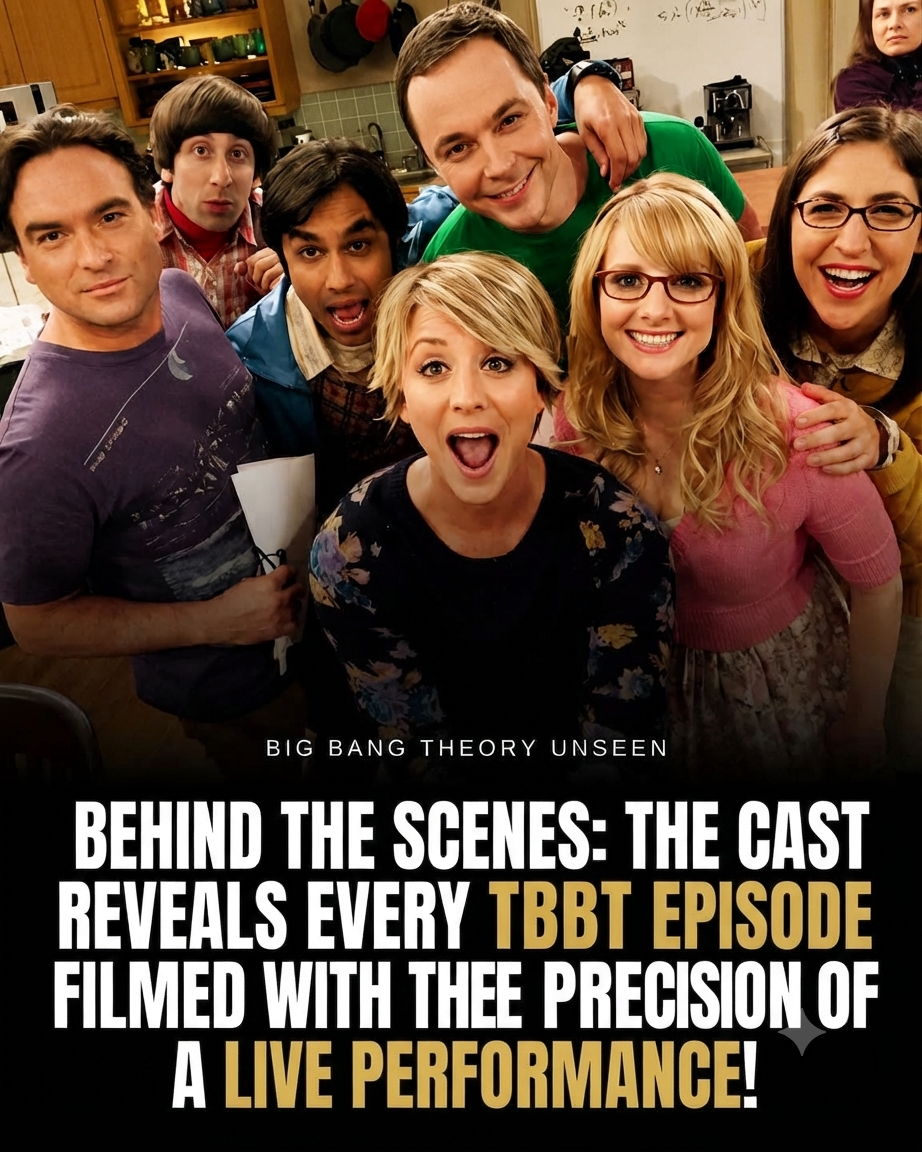
Few viewers realized that every episode of The Big Bang Theory was created in a way that's becoming increasingly rare on television.
While many modern sitcoms rely on single-camera filming and added laughter in post-production, The Big Bang Theory embraced a traditional multi-camera format performed in front of a live studio audience.
That production style became one of the show's defining strengths, helping create the energy and timing fans loved for twelve seasons.
Filmed in Front of a Real Audience
One of the things that made The Big Bang Theory feel so authentic was the audience itself.
Instead of recording scenes in an empty studio and adding canned laughter later, the cast performed before hundreds of real audience members during each taping.
Their genuine laughter, applause, and reactions became part of the finished episode, giving every joke an extra sense of excitement and spontaneity.
Many of the actors have compared the experience to performing live theatre because they could immediately feel how the audience responded to each scene.
A Carefully Planned Production
Although the performances felt natural, filming each episode required an enormous amount of planning.
After several days of rehearsals, the cast arrived on standing sets while multiple cameras were positioned to capture different angles at the same time.
Every movement had to be carefully coordinated.
Actors delivered their performances while camera operators, lighting technicians, sound crews, and stage managers worked together behind the scenes to keep everything running smoothly.
It was a carefully choreographed production involving dozens of people working in perfect sync.
It Wasn't One Continuous Performance
One common misconception is that each episode was filmed straight through like a stage play.
In reality, that's not how the production worked.
Scenes were frequently paused and repeated to capture additional camera angles, accommodate technical adjustments, or incorporate script changes made during the taping.
Sometimes a joke would be rewritten on the spot if the writers believed they could improve it after hearing the audience's reaction.
As a result, filming a single 20-minute episode often took several hours to complete.
Throughout the evening, audience members watched as sets were rearranged, equipment was moved, and scenes were performed multiple times before production moved forward.
Why the Show Felt Different
That combination of live performance and television production gave The Big Bang Theory its distinctive style.
The cast benefited from the instant feedback of a live audience while still enjoying the flexibility of television, where scenes could be refined until they were just right.
The result was a rhythm that felt both polished and spontaneous.
Many fans credit this unique production approach as one of the reasons the sitcom maintained its sharp comedic timing throughout its twelve-season run.
A Tradition That Helped Define the Series
As more sitcoms shifted toward single-camera formats, The Big Bang Theory remained committed to the classic multi-camera style that had defined many of television's greatest comedies.
That decision helped preserve the atmosphere of traditional sitcoms while allowing modern audiences to experience genuine laughter instead of manufactured reactions.
It became one of the show's signature characteristics and an important part of its lasting appeal.
No comments yet