Neil deGrasse Tyson Appeared Twice on The Big Bang Theory — And His Two Storylines Couldn't Have Been More Different
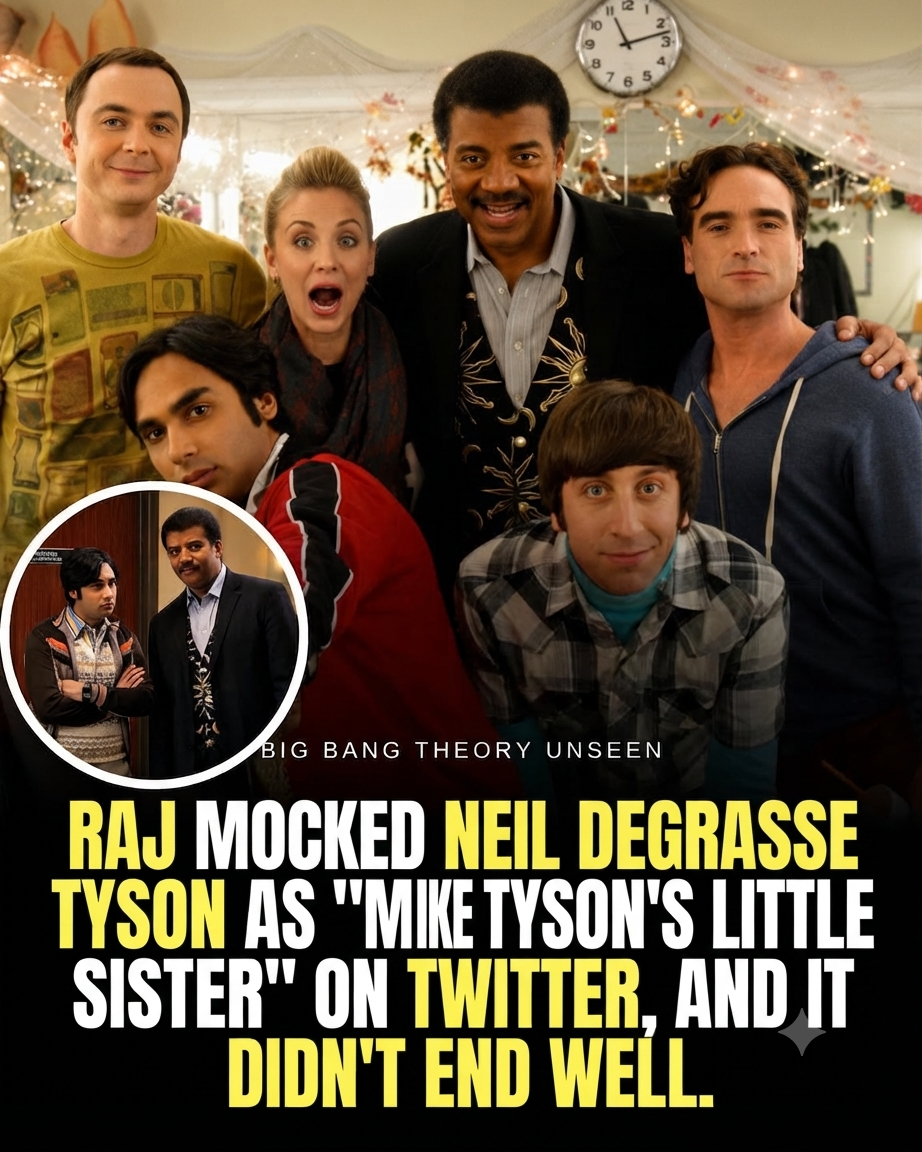
Neil deGrasse Tyson may be one of the most recognizable science communicators in the world, but his two appearances on The Big Bang Theory turned him into something very different: an opponent of Sheldon Cooper and, years later, the unexpected target of Raj Koothrappali's social-media meltdown.
Over twelve seasons, The Big Bang Theory became famous for bringing real scientists, celebrities, and public figures into its fictional Caltech universe.
Some guest appearances were little more than quick cameos.
Others became memorable parts of the story.
Neil deGrasse Tyson managed to do both.
The astrophysicist appeared on the sitcom twice, but the writers used him in completely different ways. His first appearance focused on one of Sheldon's greatest scientific grievances: Pluto.
His second appearance was considerably more chaotic, involving Raj's career insecurity, Twitter, an insult involving Mike Tyson, and even Bill Nye getting pulled into the conflict.
Together, the two appearances perfectly captured what made The Big Bang Theory's celebrity cameos so entertaining.
Sheldon vs. Neil deGrasse Tyson Begins With Pluto
Neil deGrasse Tyson first appeared during Season 4 in "The Apology Insufficiency."
The scene takes place at Caltech, where Tyson encounters Raj before eventually meeting Sheldon.
It doesn't take long for Sheldon to identify the subject that immediately makes Tyson an enemy in his eyes.
Pluto.
Sheldon has never been particularly forgiving about Pluto's reclassification as a dwarf planet, and Tyson is one of the most recognizable scientists associated with explaining the decision to the public.
Naturally, Sheldon has something to say about it.
Rather than treating Tyson like an untouchable celebrity, Sheldon immediately challenges him over Pluto's demotion.
For Sheldon, this isn't merely a scientific disagreement.
It's personal.
Sheldon Doesn't Like What Tyson Did to Pluto
One of the funniest elements of the interaction is how seriously Sheldon takes his position.
Tyson explains that the decision wasn't simply his personal choice. The International Astronomical Union voted on the classification.
That distinction, however, doesn't really solve Sheldon's problem.
In Sheldon's mind, Tyson is still associated with the loss of Pluto's planetary status.
And because Sheldon liked Pluto, Tyson becomes someone Sheldon doesn't particularly like.
It's a classic example of the show's ability to turn a genuine scientific debate into a completely ridiculous personal rivalry.
The scene works because the argument is technically rooted in a real scientific controversy while remaining completely consistent with Sheldon's personality.
The "Well, Actually" Moment That Never Happened
Neil deGrasse Tyson had already developed a recognizable public persona by the time he appeared on The Big Bang Theory.
His reputation for confidently correcting misconceptions and explaining scientific subjects made him a natural fit for a show built around scientists who constantly correct one another.
That made his interaction with Sheldon particularly satisfying.
Fans familiar with Tyson's public persona could easily imagine him responding with his trademark explanatory confidence.
But the scene doesn't turn into a long scientific lecture.
Instead, Tyson simply defends the actual process behind Pluto's reclassification while Sheldon remains unimpressed.
The comedy comes from the mismatch.
Tyson is trying to explain astronomy.
Sheldon is essentially holding a grudge on behalf of a celestial body.
Then Neil deGrasse Tyson Returned Years Later
Tyson's second appearance came much later, during Season 12's premiere, "The Conjugal Configuration."
By this point, Raj had developed considerably from the socially anxious scientist viewers first met in Season 1.
But some of his old insecurities never completely disappeared.
And when Raj discovers that he wasn't the first choice for an astrophysics television segment, those insecurities come roaring back.
The person chosen ahead of him?
Neil deGrasse Tyson.
For Raj, this isn't simply a professional disappointment.
It's a personal humiliation.
Raj's Jealousy Takes Over
Raj is already struggling with his feelings about his career and public image.
Finding out that he was the second choice only makes things worse.
Instead of accepting the situation and moving on, Raj becomes increasingly jealous of Tyson.
Then he makes the mistake that turns the entire situation into something much bigger.
He takes the argument online.
Social media becomes the battlefield.
And Raj, unfortunately, is not exactly at his best when his insecurity takes control.
The Twitter Feud Becomes Completely Ridiculous
After the television appearance, Raj encounters a negative tweet about himself.
Rather than ignoring it, he responds.
That leads him into an increasingly ridiculous exchange involving Tyson.
The insults eventually reach the kind of absurdity that only The Big Bang Theory could make work.
At one point, Raj refers to Tyson as "Mike Tyson's little sister."
It's an insult that is so strange that its absurdity becomes the joke itself.
Raj isn't exactly winning the argument.
In fact, he's making his own situation considerably worse.
Neil Tyson Decides to Call Raj
The funniest part of the storyline comes when Tyson decides not to continue the argument through Twitter.
Instead, he calls Raj directly.
And the conversation is brutally straightforward.
Tyson tells Raj that he doesn't find him funny.
Rather than getting dragged into an endless online argument, Tyson essentially decides to address the situation face-to-face.
He even invites Raj to a book signing in Pasadena so Raj can say whatever he wants directly to him.
It's a wonderfully understated response to Raj's increasingly dramatic behavior.
Raj wants a celebrity feud.
Tyson gives him a reality check.
Bill Nye Somehow Gets Involved
The storyline becomes even more ridiculous when Bill Nye gets pulled into the dispute.
Suddenly, what began as Raj feeling jealous about being the second-choice astrophysicist has expanded into a bizarre celebrity science feud.
It's exactly the sort of escalating comedy The Big Bang Theory loved.
Raj's original problem was simple:
He wasn't chosen first.
But instead of dealing with that disappointment, he turns it into a public argument with one of the world's most recognizable astrophysicists.
And somehow Bill Nye ends up involved.
Why Tyson Was Such a Perfect Guest Star
Neil deGrasse Tyson worked particularly well on The Big Bang Theory because the writers didn't simply bring him onto the show because he was famous.
They understood what made him recognizable.
His public identity was already connected to science communication, astronomy, television appearances, and his sometimes blunt presence on social media.
The show could therefore exaggerate those qualities without completely abandoning reality.
His first appearance used his scientific reputation.
His second appearance used his public personality.
The result was two very different versions of the same celebrity guest appearance.
His First Appearance Matched Sheldon's World
The Season 4 episode placed Tyson directly into Sheldon's scientific universe.
The joke was built around an intellectual disagreement.
Sheldon sees Tyson as the man associated with an unforgivable scientific decision.
Tyson sees it as the result of a formal astronomical classification process.
Neither character is particularly interested in surrendering.
It's classic Sheldon comedy.
His Second Appearance Belonged to Raj
The Season 12 appearance was completely different.
This time, Tyson wasn't primarily there to challenge Sheldon's worldview.
He became the object of Raj's insecurity.
That distinction is important because Raj's story isn't really about astronomy.
It's about recognition.
Raj wants to feel respected.
He wants to believe he's important.
And discovering that a television appearance had originally been intended for someone else hits directly at those insecurities.
Tyson simply becomes the person onto whom Raj projects all of that frustration.
Two Appearances, Two Very Different Versions of The Big Bang Theory
Tyson's appearances also demonstrate how dramatically The Big Bang Theory changed over its twelve-season run.
In Season 4, the show was still heavily centered around the original scientific quartet and their unusual social world.
By Season 12, the characters had careers, marriages, relationships, and much more complicated personal lives.
Raj's storyline therefore wasn't simply about science.
It was about professional confidence and personal insecurity.
Tyson's role changed accordingly.
The same real-world celebrity could appear in the show years apart and become part of two completely different stories.
The Writers Turned Real Science Into Sitcom Comedy
One of The Big Bang Theory's greatest strengths was its ability to take genuine scientific concepts and use them as the foundation for comedy.
Pluto's reclassification is real.
Neil deGrasse Tyson's career as an astrophysicist is real.
The public nature of his science communication is real.
But the show places those real-world elements inside exaggerated character conflicts.
Sheldon treating Pluto's reclassification like a personal betrayal is funny because it is completely believable for Sheldon.
Raj turning a television booking into an online feud is funny because it is completely believable for Raj.
The science provides the foundation.
The characters provide the comedy.
Neil deGrasse Tyson Became Part of the Show's Scientific Universe
One reason Tyson's appearances remain memorable is that he wasn't treated like a random celebrity dropped into the sitcom for publicity.
He actually fit naturally into the show's fictional world.
The characters lived and worked around Caltech, discussed astronomy and physics constantly, and frequently interacted with real scientific figures.
Tyson could therefore enter the story without feeling completely out of place.
He wasn't simply "Neil deGrasse Tyson the celebrity."
He became Neil deGrasse Tyson as interpreted through the strange universe of The Big Bang Theory.
And that distinction made the appearances work.
The Real Joke Was Always the Characters
Ultimately, Tyson wasn't the butt of every joke.
The real targets were Sheldon and Raj.
Sheldon can't let go of Pluto.
Raj can't handle being second choice.
Both situations reveal something about the characters.
That's what made the celebrity cameos on The Big Bang Theory so effective.
The famous guest wasn't necessarily there to dominate the scene.
Instead, the celebrity became a mirror that exposed something ridiculous about one of the show's regular characters.
Tyson simply gave Sheldon and Raj new opportunities to be themselves.
Final Thoughts
Neil deGrasse Tyson's two appearances on The Big Bang Theory couldn't have been more different.
The first gave viewers Sheldon Cooper defending Pluto and treating its demotion like a personal scientific betrayal.
The second turned Raj's professional insecurity into an increasingly ridiculous Twitter feud involving Tyson, an unfortunate Mike Tyson joke, and even Bill Nye.
Yet both appearances worked for the same fundamental reason.
They understood the characters.
No comments yet