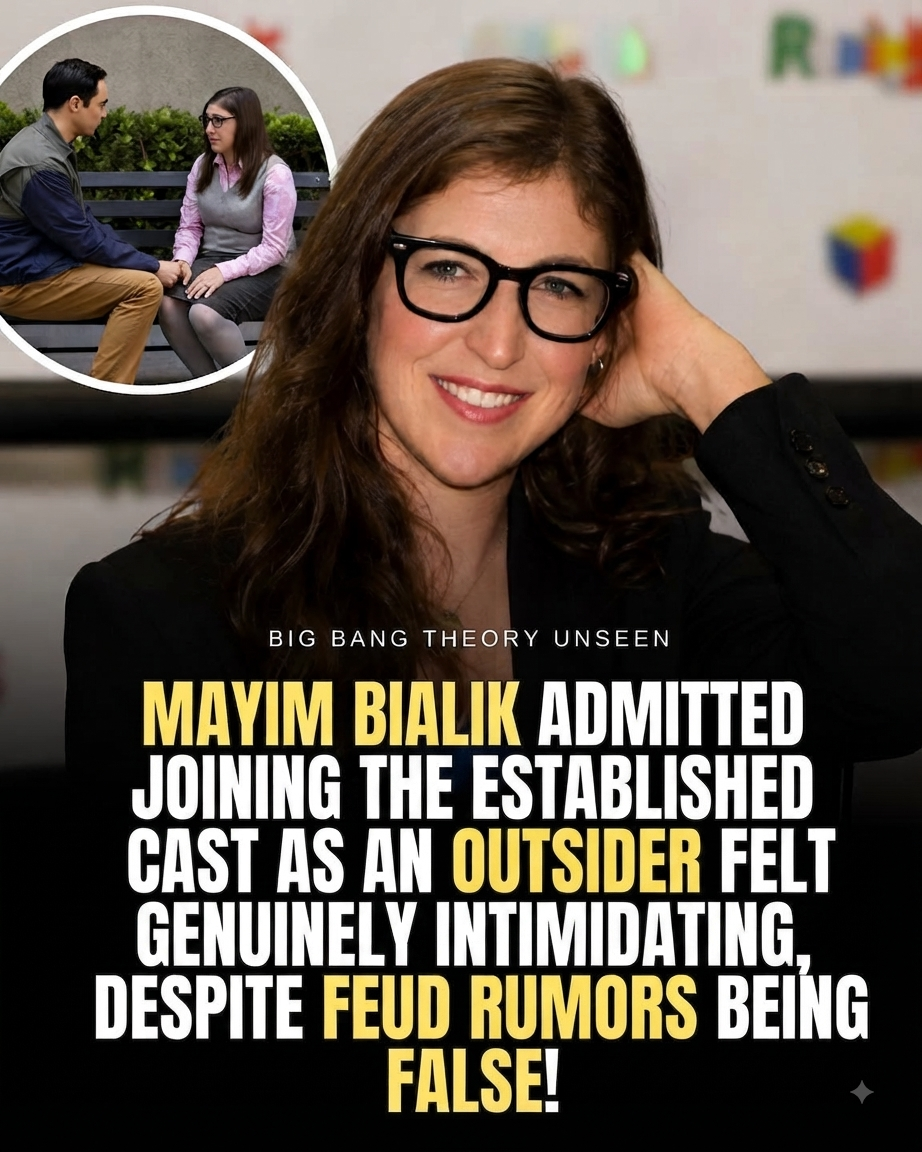
When Mayim Bialik joined The Big Bang Theory, she wasn't simply stepping into another television role. She was entering a series that had already developed an intensely loyal audience, an established rhythm, and, most importantly, a character in Sheldon Cooper whom fans had spent years carefully defining.
Amy Farrah Fowler's arrival at the end of Season 3 changed the show's trajectory. What initially appeared to be a quirky blind-date setup gradually became one of the most important relationships in the entire series.
But getting there wasn't entirely comfortable.
Bialik entered a world where audiences were protective of Sheldon and uncertain about whether romance belonged in his story at all. At the same time, rumors about tension between Bialik and Kaley Cuoco periodically circulated in the entertainment press, particularly around salary differences between the cast members.
Years later, however, the picture looked remarkably different.
The supposed rivalry never matched the reality. And the friendship between Bialik and Cuoco became one of the quieter examples of how easily entertainment headlines can distort what is actually happening behind the scenes.
Amy's Arrival Was a Major Gamble
By the time Amy appeared, Sheldon had already become one of television's most distinctive characters.
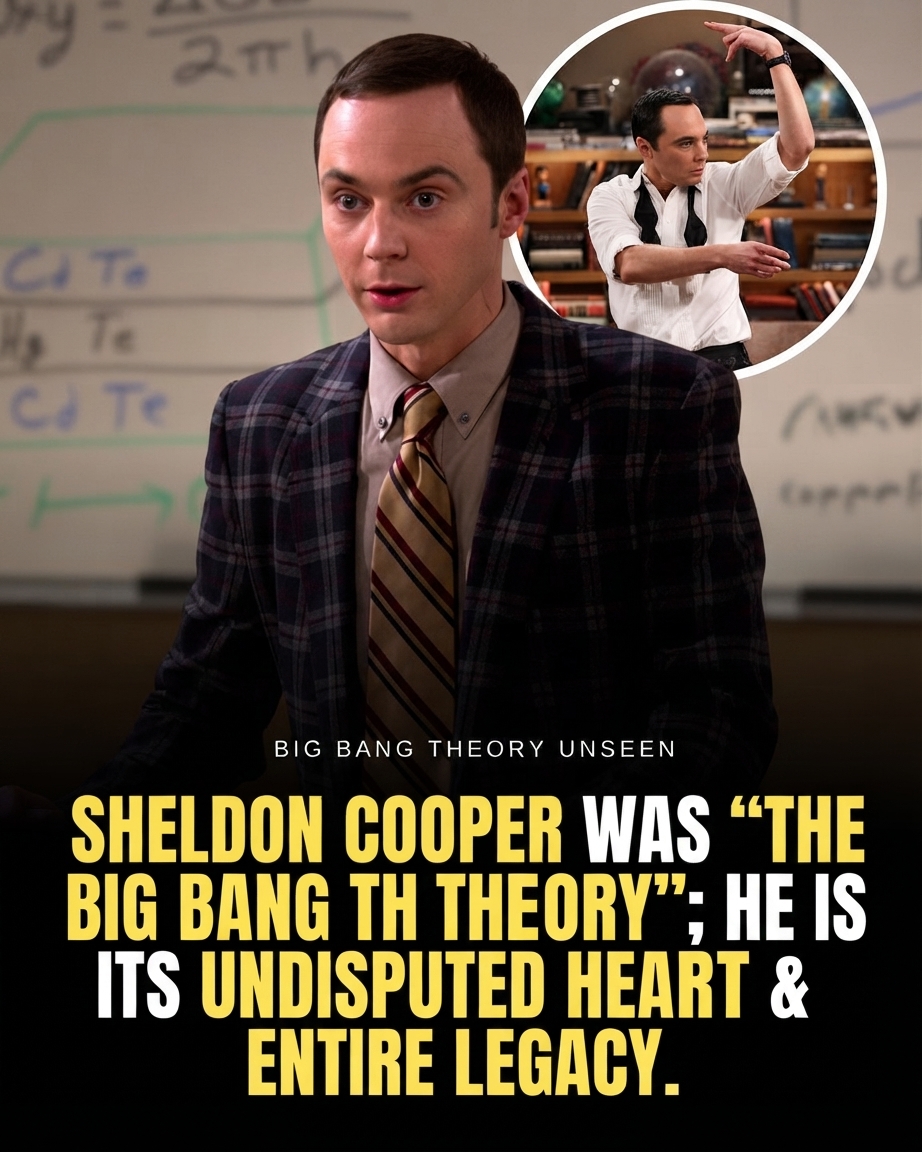
His rigid routines, extraordinary intelligence, social awkwardness, and resistance to emotional intimacy were fundamental parts of the show's comedy. He wasn't simply another sitcom character. He had become one of the central reasons audiences tuned in every week.
That made the decision to introduce a potential romantic partner particularly risky.
Amy was initially presented as someone who seemed almost engineered to fit Sheldon. She was intellectually accomplished, socially unusual, and seemingly uninterested in conventional romance.
Yet audiences weren't immediately convinced.
Bialik acknowledged that some viewers were skeptical of the direction the show was taking. Fans had become deeply protective of Sheldon, and there was concern that giving him a romantic relationship could fundamentally change the character people had come to love.
That concern wasn't entirely unreasonable.
Sheldon worked because of his emotional distance. Much of the comedy came from watching him struggle with ordinary human interactions. Introducing romance threatened to remove some of that distance.
The writers therefore had to walk a delicate line.
Amy couldn't simply "fix" Sheldon.
Instead, she had to become someone who understood him while still challenging him.
Mayim Bialik Had to Earn Amy's Place
Bialik's background made her casting particularly interesting.
She wasn't an unknown performer walking into a successful sitcom. She was already a familiar face to television audiences, most famously from Blossom, but she had spent significant time away from the entertainment spotlight while pursuing an academic career.
Her real-life scientific background also made her an unusually natural fit for Amy.
Bialik earned a PhD in neuroscience from UCLA, meaning that the show's decision to make Amy a neuroscientist wasn't merely something she had to imitate.
She understood the world her character occupied.
That distinction helped make Amy feel different from a stereotypical television "genius." Bialik could bring an authenticity to Amy's academic identity while simultaneously playing the character's awkwardness, intensity, and increasingly complicated emotional life.
But none of that guaranteed that audiences would accept her.
Amy needed time.
And so did the audience.
Sheldon and Amy Slowly Became the Point
One of the smartest things The Big Bang Theory did with Amy was refusing to make her relationship with Sheldon immediately conventional.
Their romance developed slowly.
There were awkward conversations, misunderstandings, disagreements, unusual displays of affection, and long stretches where Sheldon seemed incapable of understanding what Amy actually wanted from him.
That became the joke.
But eventually, it became the emotional foundation of the relationship.
Amy didn't transform Sheldon overnight. She gradually became someone he trusted enough to allow into parts of his life that had previously been closed to everyone.
For Bialik, that meant playing a character whose development was happening alongside Sheldon's.
The woman who initially seemed almost as socially disconnected as Sheldon eventually became one of the few people capable of understanding his emotional needs.
By the later seasons, the relationship that some viewers had initially questioned had become one of the show's defining romances.
Their eventual wedding in Season 11 and Nobel Prize victory in the finale represented the culmination of nearly a decade of character development.
That journey would have been difficult to imagine when Amy first appeared.
Then Came the Salary Rumors
While Amy's story was developing on screen, Bialik was also dealing with something considerably less entertaining away from it: speculation about her relationship with the rest of the cast.
In 2016, reports circulated claiming that Bialik was earning approximately $100,000 per episode while Kaley Cuoco was earning around $1 million.
The enormous difference naturally generated headlines.
But the reports also helped fuel a larger narrative suggesting that Bialik and Cuoco might have tension between them because of the disparity.
Bialik's representative strongly rejected the feud claims.
Speaking to Gossip Cop, the representative said there was "no truth to this story whatsoever."
That distinction matters.
A difference in salary does not automatically mean two performers dislike one another.
Television contracts are complicated, particularly on long-running series where actors join at different points, negotiate different deals, and accumulate different levels of bargaining power over time.
The fact that two actresses were reportedly earning different amounts did not establish that there was a personal rivalry.
Yet celebrity media often turns professional circumstances into personal drama.
The Reality Was Much More Interesting
If there really had been a major feud between Bialik and Cuoco, their later interactions would be difficult to reconcile with that narrative.
Cuoco was among the cast members who attended Bialik's wedding, a gesture that hardly fits the image of two actresses locked in a bitter rivalry.
More importantly, the story of the cast's salary negotiations in 2017 provided an even stronger indication of the relationship between the ensemble.
Jim Parsons, Johnny Galecki, Kaley Cuoco, Kunal Nayyar, and Simon Helberg agreed to reduce their per-episode salaries by $100,000 during negotiations for Seasons 11 and 12.
The intention was to help free up money for Bialik and Melissa Rauch, whose salaries had historically lagged behind those of the original five.
The move helped increase Bialik and Rauch's compensation substantially.
It wasn't complete salary parity, but it was an unusually visible example of established stars using their negotiating power to improve the position of colleagues who had joined the ensemble later.
And Cuoco was part of that decision.
That action speaks considerably louder than a collection of tabloid headlines.
The "Feud" Narrative Never Made Much Sense
There is something revealing about the way the supposed Bialik-Cuoco feud was framed.
The two actresses played characters who eventually became extremely close friends on the show.
Amy, Penny, and Bernadette developed their own social circle, separate from the original male-centered group.
That evolution became one of the most important structural changes in the series.
At first, Penny represented the socially confident outsider while Amy was the academically brilliant but socially awkward newcomer. Over time, however, the three women developed a friendship that became central to the later seasons.
The contrast between their fictional relationship and the rumors surrounding their real-life relationship was striking.
On screen, Penny and Amy learned to appreciate one another's differences.
Off screen, the evidence pointed toward something far more ordinary and far less dramatic than a feud: two actresses working together on an enormously successful television show.
Amy Ultimately Proved the Skeptics Wrong
Perhaps the most satisfying part of the story is what happened to Amy herself.
The character that some fans initially worried would damage Sheldon eventually became essential to his development.
Amy didn't erase Sheldon's personality.
She gave the writers another dimension through which to explore it.
His relationship with Amy allowed the series to examine vulnerability, commitment, compromise, jealousy, affection, and emotional growth without abandoning the fundamental qualities that made Sheldon funny.
Bialik's performance was crucial to that balance.
Amy could be intelligent without constantly competing with Sheldon.
She could be emotionally demanding without becoming unlikeable.
She could challenge him without turning into someone whose only purpose was to reform him.
Most importantly, she became a fully developed character in her own right.
Her Nobel Prize victory with Sheldon in the series finale wasn't simply a romantic reward.
It was the culmination of her own scientific journey.
The Friendship Behind the Headlines
Entertainment stories often focus on conflict because conflict attracts attention.
A supposed feud is more clickable than a quiet friendship.
A salary dispute sounds more dramatic than colleagues supporting one another.
But the history of Bialik and Cuoco provides a useful reminder that the most interesting story isn't always the loudest one.
The public evidence paints a much more complicated picture than the feud narrative suggested.
Bialik entered The Big Bang Theory at a difficult moment, joining an established ensemble and taking on a character whose relationship with Sheldon was initially viewed with suspicion.
She then became part of one of the show's most successful long-term storylines.
At the same time, rumors attempted to turn salary differences into personal hostility.
But the later evidence — including Cuoco's support for Bialik and the collective salary sacrifice made by the original cast — told a very different story.
There was no dramatic Hollywood rivalry to uncover.
There was simply a group of performers who had spent years working together, navigating enormous professional success and the complicated realities that came with it.
From Outsider to Essential Cast Member
Looking back, Mayim Bialik's journey on The Big Bang Theory is remarkable precisely because of how uncertain it initially seemed.
Amy was introduced as an experiment.
Would audiences accept her?
Would Sheldon remain funny?
Could the character become more than a female counterpart to Sheldon?
Could the writers create a genuine romance without destroying the qualities that made the characters work?
The answer, eventually, was yes.
Amy became indispensable.
And Bialik became one of the defining members of the show's later ensemble.
The same period also produced a completely different lesson about celebrity culture.
The rumors surrounding Bialik and Cuoco suggested one story.
Their actions suggested another.
And when the two are placed side by side, the difference is striking.
Final Thoughts
Mayim Bialik's Big Bang Theory journey began with uncertainty.
She entered an established series, inherited a character that audiences weren't immediately sure they wanted, and became part of a storyline that fundamentally changed Sheldon Cooper.
At the same time, outside the fictional world of the show, salary reports created speculation about her relationship with Kaley Cuoco.
But years of evidence ultimately told a much simpler story.
Amy wasn't a threat to Sheldon.
She became one of the most important people in his life.
And Cuoco wasn't the rival that tabloid headlines sometimes suggested.
She was a colleague and, by the available evidence, a genuine friend who supported Bialik both personally and professionally.
Perhaps that's the most satisfying part of the story.
The headlines wanted a feud.
The show gave us a friendship.
And sometimes, the truth behind a television story is considerably less dramatic — and considerably more meaningful — than the rumor.


No comments yet