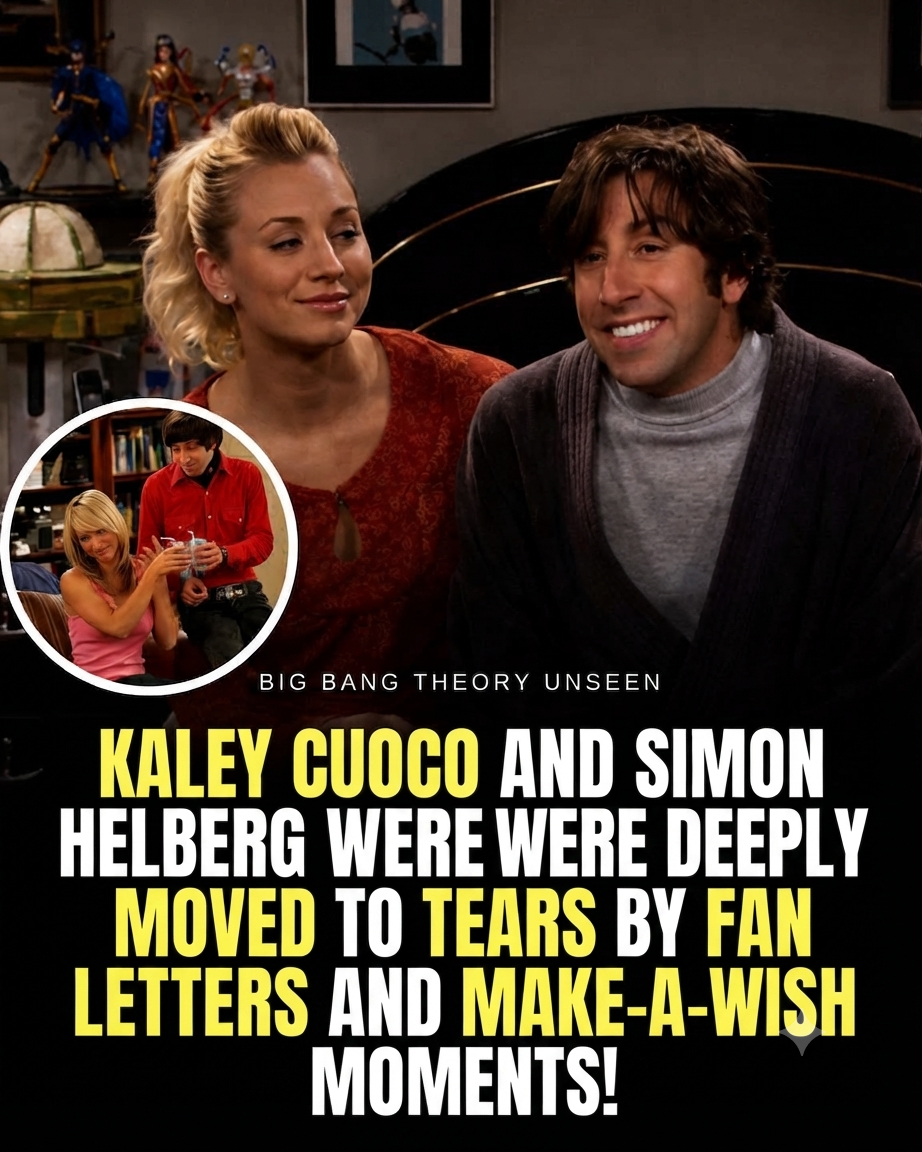
The Big Bang Theory Changed Lives in Ways Kaley Cuoco and Simon Helberg Never Expected
One of the most touching stories behind The Big Bang Theory isn't about record-breaking ratings, Emmy Awards, or television history—it's about the countless lives the sitcom quietly touched far beyond the screen.
For twelve seasons, millions of viewers tuned in each week to laugh alongside Sheldon, Leonard, Penny, Howard, Raj, Amy, and Bernadette.
To most people, the series was simply a brilliant comedy.
But for many fans, it became something much deeper.
It became comfort during difficult times.
It became a familiar place to escape.
And for some, it became a source of hope when life felt overwhelming.
Years later, Kaley Cuoco and Simon Helberg have reflected on the emotional encounters that made them realize just how much The Big Bang Theory truly meant to people around the world.
Awards Can Measure Success—But Fans Tell the Real Story
Television success is usually measured in numbers.
Ratings.
Awards.
Syndication deals.
Streaming records.
By every traditional standard, The Big Bang Theory was already one of the biggest sitcoms ever made.
The series dominated television ratings for years, became a worldwide phenomenon, and remained one of CBS's most valuable franchises throughout its twelve-season run.
Yet Kaley Cuoco and Simon Helberg have both suggested that none of those achievements compare to the impact they witnessed through their interactions with fans.
The moments they remember most weren't red carpets or award ceremonies.
They were the letters.
The hospital visits.
The conversations that revealed how deeply the show had become woven into people's lives.
The Make-A-Wish Visits That Left the Cast in Tears
Among the most emotional experiences for both actors were visits arranged through the Make-A-Wish Foundation.
Meeting children facing life-threatening illnesses is something that affects nearly every performer.
For Cuoco and Helberg, those visits carried extraordinary emotional weight.
Many of the children didn't simply want to meet famous actors.
They wanted to meet Penny.
They wanted to meet Howard.
Those fictional characters had become trusted companions during some of the most frightening periods of their young lives.
For children spending months in hospitals, recovering from treatments, or facing uncertain futures, The Big Bang Theory offered something incredibly valuable.
It offered laughter.
It offered routine.
And perhaps most importantly, it offered moments where illness wasn't the center of their world.
Cuoco and Helberg have both recalled these meetings with visible emotion, explaining that experiences like these completely changed how they viewed their work.
Letters That Revealed the Show's True Impact
The emotional stories didn't end with hospital visits.
Throughout the show's twelve-year run, the cast regularly received letters from viewers across the world.
Many weren't simply messages praising favorite episodes.
Instead, they described deeply personal experiences.
Fans shared how they had watched The Big Bang Theory while undergoing chemotherapy.
Others explained that the series helped them cope with depression, grief, or the loneliness that often follows major life changes.
Some viewers wrote that watching the show every evening became part of their healing process.
Others said the familiar characters gave them something positive to look forward to during incredibly difficult periods.
These weren't stories about celebrity.
They were stories about comfort.
Familiar Characters Became Emotional Companions
One reason The Big Bang Theory resonated so deeply is that every character represented something different to different people.
Some found comfort in Sheldon's routines and predictable habits.
For viewers whose own lives felt chaotic, his structured world created a surprising sense of stability.
Others related to Howard's journey from an immature engineer into a devoted husband and father.
Many admired Leonard's perseverance despite years of insecurity.
Raj's struggles with confidence and relationships spoke to viewers facing similar challenges.
And Penny's warmth, kindness, and emotional intelligence often made her feel like someone audiences genuinely knew.
Rather than existing only as sitcom characters, they gradually became familiar companions for millions of people around the world.
A Different Definition of Success
Actors naturally hope audiences enjoy their work.
Few expect it to become part of someone's emotional survival.
That realization changed the way Cuoco and Helberg viewed the series they had spent twelve years creating.
Every episode they filmed might make someone smile after a difficult day.
Every joke might briefly distract someone from pain.
Every rerun might become part of someone's daily routine during recovery or loss.
Those are things that no television ratings report can ever measure.
Why Comedy Matters More Than People Realize
Comedy is sometimes viewed as lighter than dramatic storytelling.
But the experiences shared by The Big Bang Theory fans suggest something very different.
Laughter provides relief.
Familiar characters create consistency.
Shared humor reminds people that happiness can still exist during life's darkest moments.
For many viewers, watching Sheldon argue over his spot on the couch or Howard make another ridiculous joke wasn't just entertainment.
It was therapy without realizing it.
That emotional connection explains why the sitcom continues attracting new audiences years after its finale.
People don't simply revisit the show because it's funny.
They revisit it because it feels like coming home.
The Legacy That Matters Most
Long after awards are forgotten and ratings records are broken by newer shows, the stories shared by fans remain.
The handwritten letters.
The emotional hospital visits.
The quiet conversations with people whose lives were changed in unexpected ways.
Those moments reminded Kaley Cuoco and Simon Helberg that acting isn't only about performing.
Sometimes, it's about helping complete strangers through moments you'll never fully understand.
That realization has become one of the most meaningful parts of The Big Bang Theory's legacy.
Final Thoughts
The Big Bang Theory will always be remembered as one of television's most successful sitcoms.
Its ratings were extraordinary.
Its characters became iconic.
No comments yet