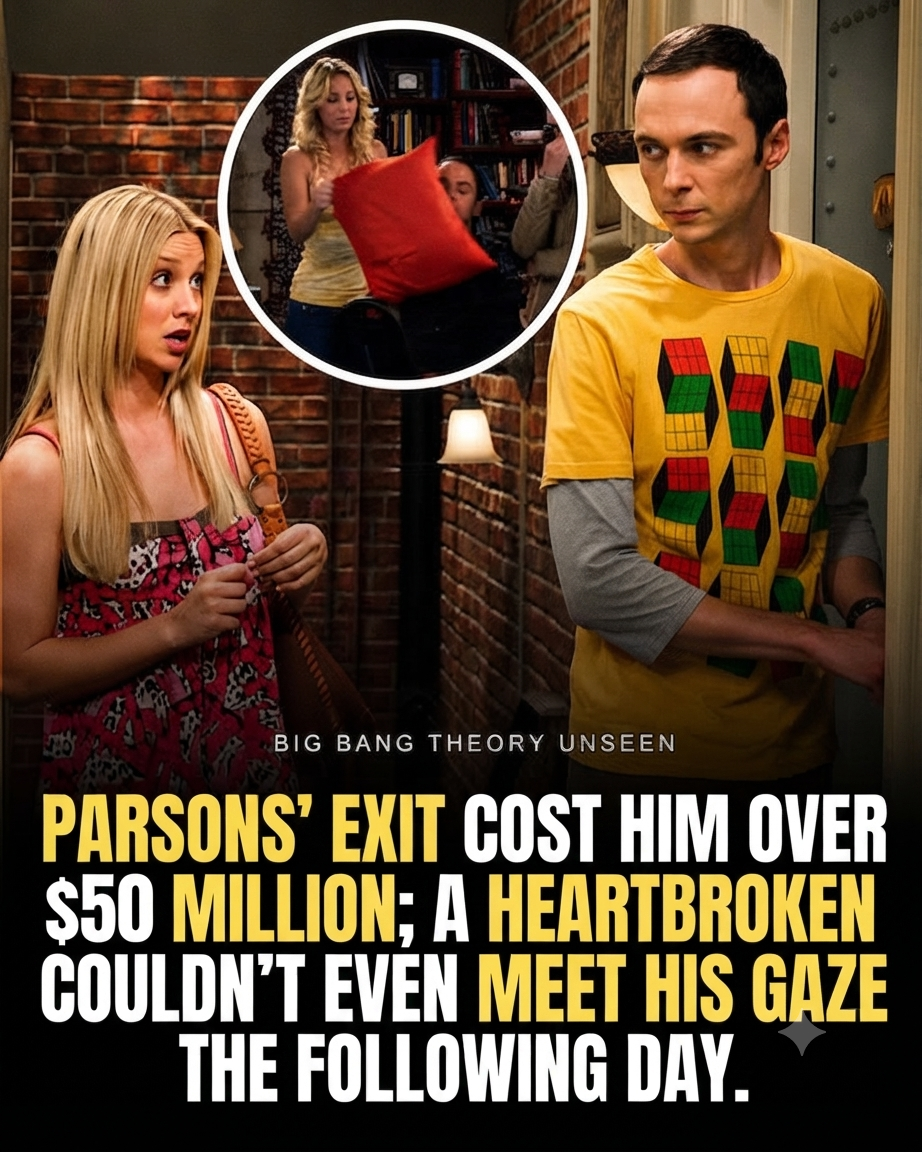
One of the biggest behind-the-scenes moments in The Big Bang Theory history had nothing to do with a script or storyline. Instead, it came from a single decision by Jim Parsons—a choice that ultimately brought one of television's most successful sitcoms to an unexpected end.
By 2018, The Big Bang Theory was still one of the highest-rated comedies on television. The cast remained hugely popular, the series continued attracting millions of viewers, and Warner Bros. was reportedly prepared to keep the show going for at least two more seasons.
From a business perspective, continuing the sitcom seemed like the obvious choice.
But behind the scenes, one cast member had reached a very different conclusion.
A $50 Million Opportunity
According to multiple reports, Jim Parsons was offered a deal worth approximately $50 million to return for two additional seasons of The Big Bang Theory.
For most actors, turning down an offer of that size would seem almost unimaginable.
Yet Parsons wasn't motivated by money.
Years later, speaking with Entertainment Weekly, he explained that the decision wasn't driven by conflict, creative disagreements, or contract disputes.
Instead, he simply felt something much more personal.
As Parsons described it, the decision was "both complex and simple."
Ultimately, he said he knew "innately that it was time."
After portraying Sheldon Cooper for twelve seasons, he believed he had reached the natural end of that chapter in his life.
Chuck Lorre Called the Cast Together
Once Parsons had made his decision, co-creator Chuck Lorre gathered the principal cast in his office.
It was there that Parsons personally explained he intended to leave after Season 12.
The announcement came as an enormous surprise.
Rather than discussing ways to continue the series without Sheldon Cooper, Lorre made his own position clear.
He told the cast that he didn't believe there was a future for The Big Bang Theory without its central character.
That meeting effectively decided the fate of the series.
Almost immediately afterward, a press release confirming that Season 12 would be the show's final season was issued.
One conversation had brought twelve years of television history to an end.
An Emotional Room Filled With Tears
The announcement wasn't easy for anyone in the room.
According to those involved, there was "a lot of crying."
Among the most emotional reactions came from Kaley Cuoco, who had worked alongside Parsons since the show's very first episode in 2007.
Years later, Cuoco admitted the news came as a tremendous shock.
She recalled thinking:
"The shock of 'Oh my God, what is next?' was scary."
After spending more than a decade together, the cast had become more than coworkers.
The sitcom had shaped their adult lives, careers, and friendships.
The idea that it would suddenly end was difficult to process.
The Morning After Wasn't Easy
The emotional meeting didn't instantly resolve everyone's feelings.
According to showrunner Steve Molaro, Cuoco sent him a text message the following morning explaining that she was deeply upset with Parsons.
She even questioned whether she could come to work that day.
Johnny Galecki also contacted Chuck Lorre following the announcement.
Despite those emotions, the cast reported to work as scheduled.
The atmosphere, however, was noticeably different.
Molaro later described it as "kind of icy."
For the first time in years, uncertainty had entered a set that had always felt like home.
Kaley Cuoco Could Barely Look at Jim Parsons
One of the most talked-about details from those first days came from Cuoco herself.
During the initial run-through after the announcement, she admitted she could barely make eye contact with Jim Parsons.
The news was still too fresh.
Although there was no public argument between them, the emotional weight of the situation was impossible to ignore.
Everyone was trying to process the fact that the sitcom they had spent twelve years building together was coming to an end.
Fortunately, those feelings didn't last.
Friendship Won in the End
As the days passed, emotions gradually settled.
Rather than allowing disappointment to define the show's final season, the cast made a conscious decision to appreciate the time they still had together.
Cuoco later explained that she reached an important realization.
If this truly was the end of The Big Bang Theory, she didn't want the final memories to be filled with resentment.
Instead, she chose to celebrate everything they had accomplished together.
That decision helped restore the warmth and camaraderie audiences had always associated with the cast.
By the time filming concluded, the friendships built over twelve seasons remained intact.
Why Jim Parsons Chose to Leave
Looking back, Parsons has consistently emphasized that his decision wasn't caused by burnout, conflict, or dissatisfaction with the series.
He simply felt personally ready for something new.
After spending more than a decade portraying one of television's most recognizable characters, he believed the timing felt right.
His honesty may have surprised fans, but it also reflected the same thoughtful approach he had always brought to his career.
Rather than continuing simply because the opportunity existed, Parsons chose to leave while he still felt grateful for the experience.
It was a difficult choice—but one he has never publicly suggested he regrets.
The End of an Era
When The Big Bang Theory aired its final episode in May 2019, it concluded one of the most successful sitcom runs in television history.
Across twelve seasons, the series won multiple Emmy Awards, became one of the highest-rated comedies of its generation, and introduced millions of viewers to unforgettable characters led by Sheldon Cooper, Leonard Hofstadter, Penny, Howard, Raj, Amy, and Bernadette.
Its finale wasn't driven by declining ratings or network cancellation.
Instead, it ended because one actor believed the story had reached its natural conclusion.
That's a remarkably rare ending in television.
Final Thoughts
Jim Parsons' decision to walk away from a reported $50 million contract remains one of the most surprising moments in modern television history.
It wasn't a choice driven by controversy or conflict.
It came from an actor who felt, after twelve extraordinary seasons, that it was simply time to move on.
No comments yet