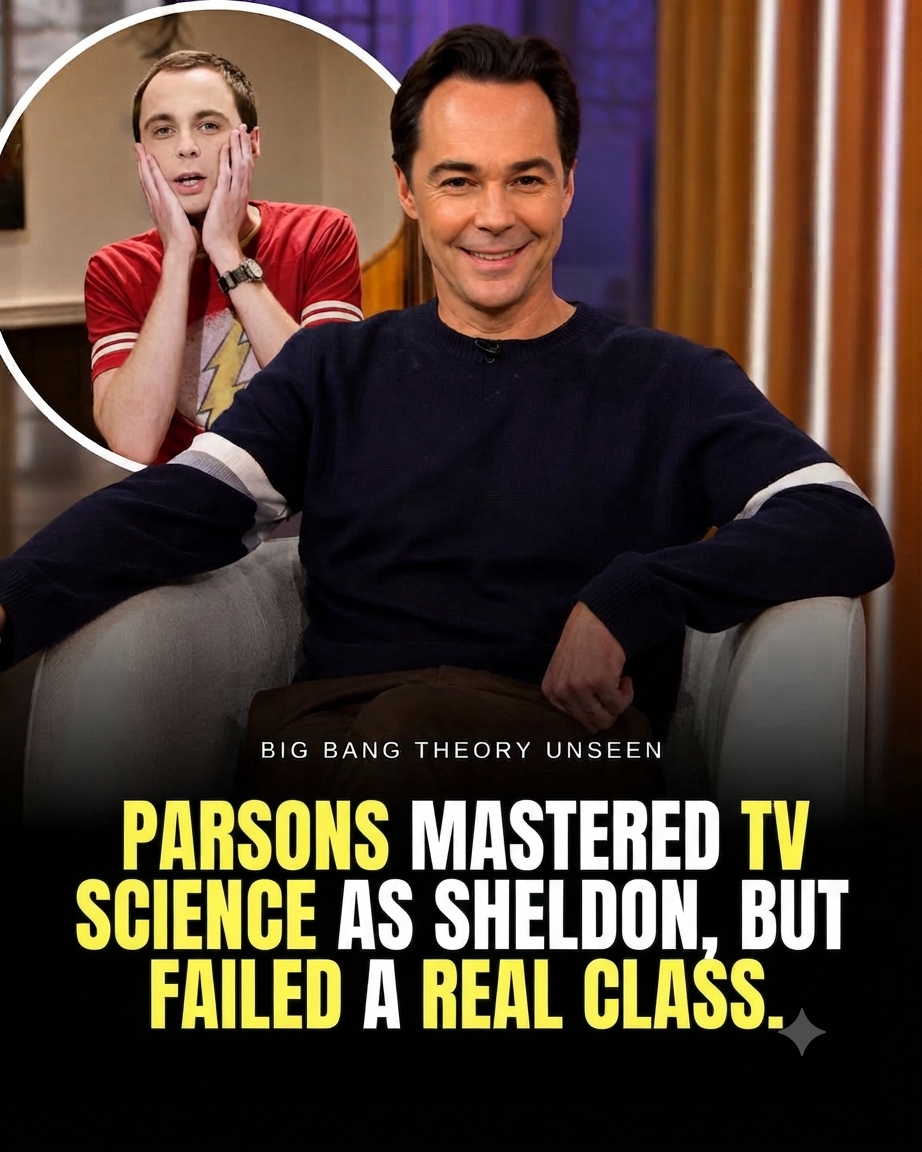
Few actors have become as closely associated with a single character as Jim Parsons did with Sheldon Cooper. After 12 seasons and 279 episodes of The Big Bang Theory, it became difficult for audiences to separate the actor from the brilliant theoretical physicist he portrayed. Sheldon's encyclopedic knowledge of science, comic books, and science fiction felt so natural that many viewers assumed Parsons must share at least some of those passions in real life.
The truth, however, is almost the complete opposite.
Behind one of television's most convincing portrayals of a scientific genius was an actor who openly admits he isn't a scientist, isn't particularly interested in science fiction, and even struggled with science in school.
Ironically, those differences make his performance even more impressive.
Jim Parsons Once Failed a Science Class
Considering how effortlessly Sheldon Cooper discusses quantum mechanics, string theory, and particle physics, it's easy to assume Jim Parsons had a natural talent for science.
He didn't.
In fact, Parsons has openly revealed that he failed a science class during his school years.
It's a surprising confession for someone who spent over a decade portraying one of television's most brilliant scientific minds.
Unlike Sheldon, Parsons never dreamed of becoming a physicist or researcher.
Science simply wasn't his strongest subject.
Yet millions of viewers believed every technical conversation Sheldon delivered.
That wasn't because Parsons suddenly became an expert.
It was because he became an exceptional actor.
Learning Sheldon's Dialogue Was Like Studying for an Exam
One of the greatest challenges of playing Sheldon Cooper wasn't the comedy.
It was the science.
Nearly every episode featured complex discussions involving physics, mathematics, engineering, or astronomy.
Many scripts contained terminology that even scientifically educated viewers found challenging.
Parsons has explained that mastering those scenes required enormous preparation.
Instead of relying on scientific knowledge, he used flashcards, Word documents, repetition, and constant rehearsal to memorize every technical line.
Sometimes the scientific dialogue changed only slightly between rehearsals and filming, meaning the actor had to relearn complicated terminology on very short notice.
His confidence on screen came from dedication—not expertise.
Sheldon's Greatest Hobby Wasn't Parsons' Hobby
The differences between actor and character didn't stop with science.
Sheldon Cooper's life revolved around science fiction.
Whether discussing Star Trek, Star Wars, comic books, fantasy novels, superhero films, or video games, Sheldon possessed an astonishing level of knowledge.
His enthusiasm defined much of his personality throughout the series.
Jim Parsons, however, has repeatedly admitted something many fans find shocking.
He's not a science fiction fan.
Unlike Sheldon, Parsons didn't grow up immersed in fictional universes or comic book mythology.
The excitement audiences saw on screen wasn't drawn from personal obsession.
It was carefully researched, rehearsed, and performed.
Every passionate conversation about Klingons, Jedi, comic books, or superheroes reflected the skill of an actor—not his own hobbies.
The Bigger the Difference, the Greater the Performance
Perhaps the most remarkable aspect of Parsons' work is how completely audiences believed him.
After watching hundreds of episodes, many fans naturally assumed the actor shared Sheldon's interests.
That's the mark of truly convincing acting.
Parsons didn't simply memorize scientific terminology.
He understood how Sheldon thought.
He mastered the character's confidence, precision, awkward body language, speech patterns, and obsessive attention to detail.
Every line felt authentic because Parsons fully committed to the role.
The audience wasn't watching Jim Parsons pretending to be intelligent.
They were watching Sheldon Cooper.
That's an important distinction.
Creating One of Television's Greatest Characters
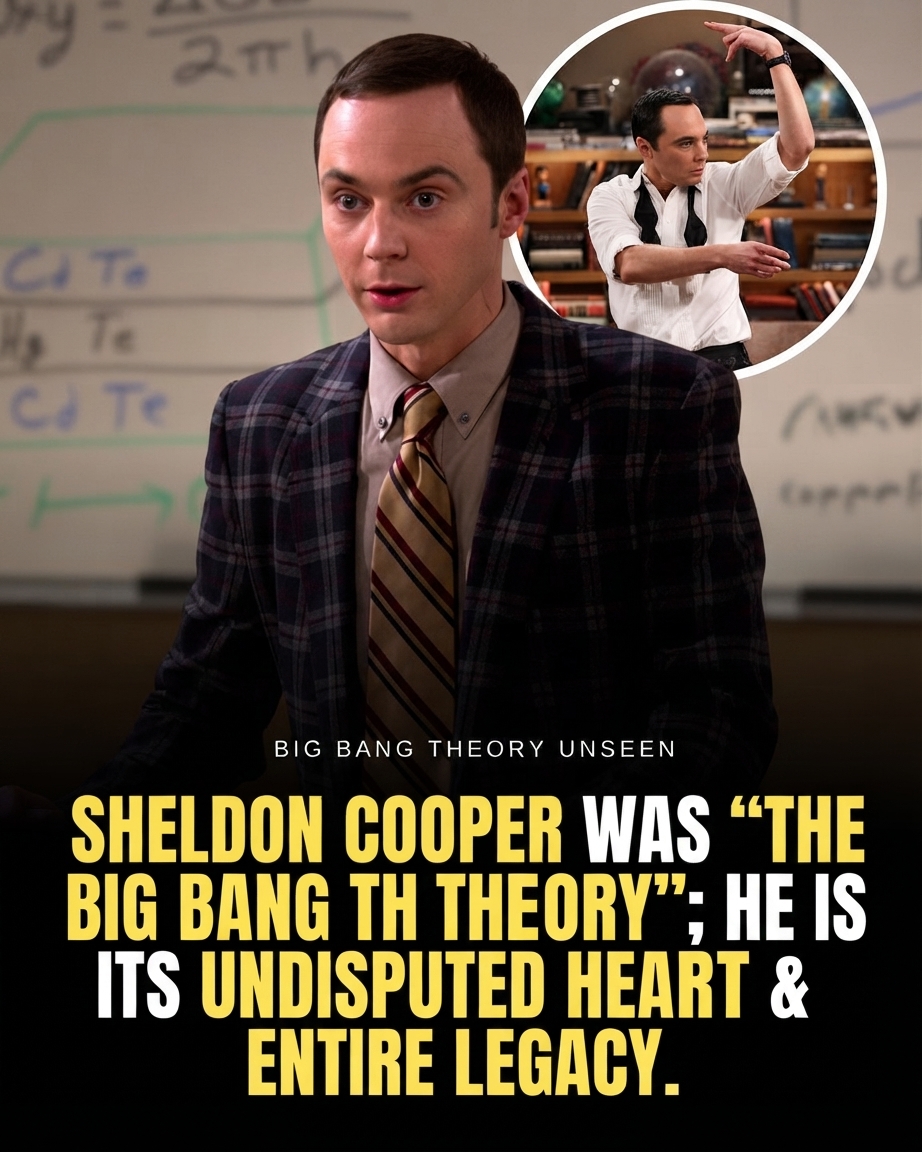
Throughout The Big Bang Theory, Sheldon evolved far beyond being a stereotypical genius.
Thanks largely to Parsons' nuanced performance, the character became emotionally complex, unexpectedly vulnerable, and deeply human.
Over twelve seasons, viewers watched Sheldon gradually learn friendship, romance, empathy, and emotional growth without ever losing the eccentric personality that made him unique.
Achieving that balance required extraordinary control as an actor.
Too much change would have made Sheldon feel like a different person.
Too little change would have prevented meaningful character development.
Parsons managed both beautifully.
The Award-Winning Performance That Defined a Career
Jim Parsons' portrayal of Sheldon Cooper earned widespread critical acclaim throughout the show's run.
His work received multiple Emmy Awards and Golden Globe recognition, cementing Sheldon as one of television's most iconic sitcom characters.
Those accolades weren't awarded because Parsons understood theoretical physics.
They were awarded because he convinced millions of viewers that he did.
That's what great acting looks like.
A Reminder of What Acting Really Means
Sometimes audiences assume the best performances come from actors playing versions of themselves.
Jim Parsons proves the opposite.
He wasn't drawing upon a lifelong love of science.
He wasn't recreating personal hobbies.
He wasn't naturally similar to Sheldon Cooper.
Instead, he built the character piece by piece through preparation, observation, discipline, and extraordinary talent.
The further the actor stood from the character, the more remarkable the achievement became.
No comments yet