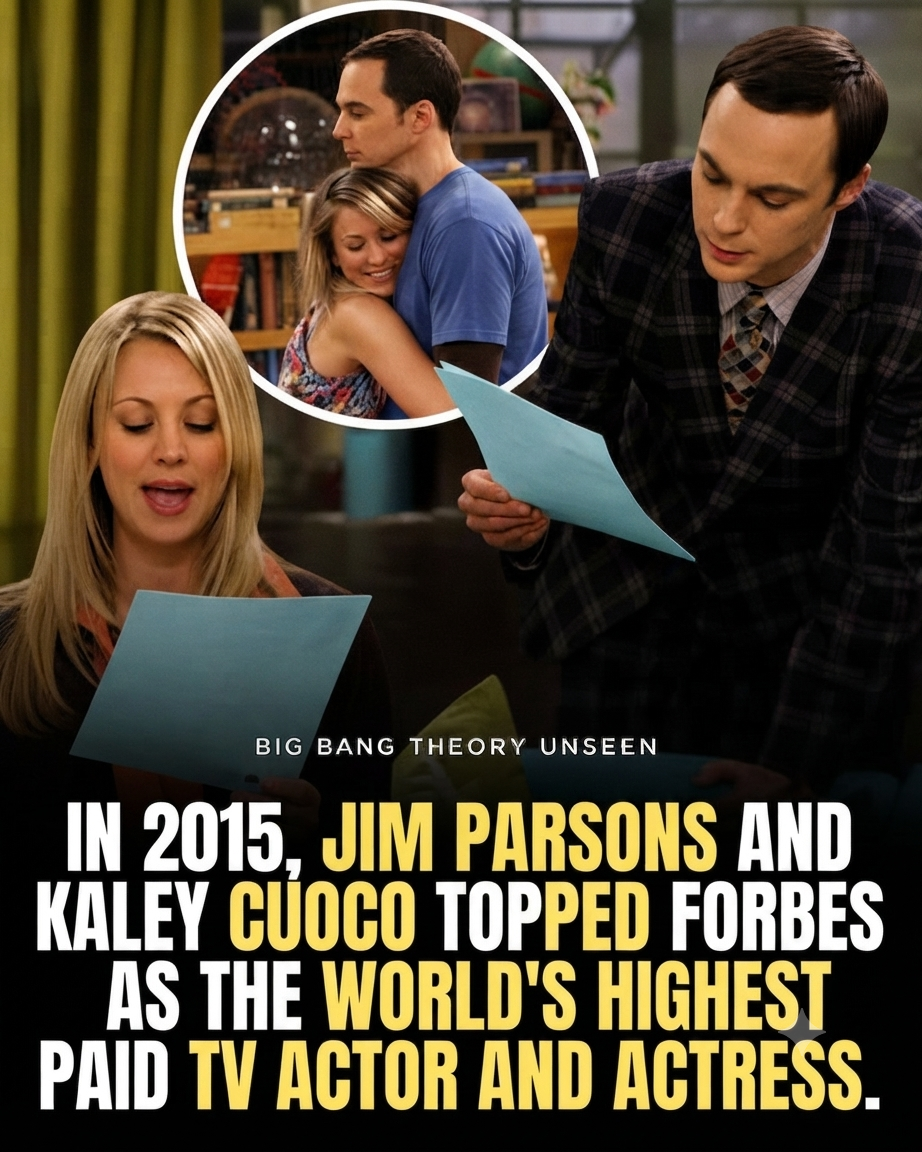
At the peak of its success, The Big Bang Theory wasn't just dominating ratings—it was rewriting television history.
In 2015, the hit CBS sitcom achieved an extraordinary milestone that no single television series had accomplished before. For the first time, the same show produced both the highest-paid television actor and the highest-paid television actress in the world.
Those stars were Jim Parsons and Kaley Cuoco.
It was a remarkable reflection of just how powerful The Big Bang Theory had become during its golden years.
Jim Parsons Reached the Top
According to Forbes' 2015 rankings, Jim Parsons earned an estimated $29 million between June 2014 and June 2015, making him the highest-paid actor on television.
Much of that income came from his groundbreaking contract with The Big Bang Theory.
Parsons reportedly earned $1 million per episode, placing him among the best-paid performers in television history.
His earnings were further boosted by profit participation in the show's success, theater projects outside television, and endorsement partnerships, including a major advertising deal with Intel.
At the time, no television actor earned more.
Kaley Cuoco Joined Television's Elite
Kaley Cuoco also reached a career-defining milestone in 2015.
Following successful contract negotiations alongside co-stars Jim Parsons and Johnny Galecki, Cuoco secured a reported $1 million per episode salary, making the trio the first sitcom cast members to reach that figure since the stars of Friends more than a decade earlier.
Combined with lucrative endorsement deals and commercial partnerships, Forbes estimated Cuoco's earnings at $28.5 million for the year.
The total placed her at the top of the highest-paid television actresses ranking, where she shared the No. 1 position with Modern Family star Sofia Vergara.
For Cuoco, it represented one of the biggest financial achievements of her career.
A Historic Achievement for One Show
What made the rankings particularly remarkable was that both the highest-paid actor and the highest-paid actress came from the same television series during the same year.
Television has produced many successful ensembles, but rarely has a single show generated such enormous earning power for multiple cast members simultaneously.
The accomplishment highlighted the extraordinary cultural and commercial influence of The Big Bang Theory.
At the time, the sitcom was one of the most-watched programs in the world and a cornerstone of CBS's primetime lineup.
Its popularity translated directly into unprecedented salaries for its leading stars.
A Look at Television's Pay Gap
The Forbes rankings also revealed an important industry reality.
Even at the highest levels of television success, a significant earnings gap remained between male and female performers.
The minimum income required to appear on Forbes' highest-paid TV actors list was substantially higher than the threshold for actresses.
The contrast reflected broader discussions about compensation disparities across the entertainment industry.
While stars like Cuoco were achieving record-breaking success, the numbers demonstrated that television's biggest earners were still operating within an unequal system.
The Peak of a Television Phenomenon
By 2015, The Big Bang Theory had evolved from a quirky sitcom about scientists into one of the most profitable television franchises ever created.
Its cast members had become household names, its episodes attracted millions of viewers each week, and its global popularity continued to grow.
The Forbes rankings served as a snapshot of that moment.
They captured the point when the show's success translated into unprecedented financial rewards for the people at its center.


No comments yet