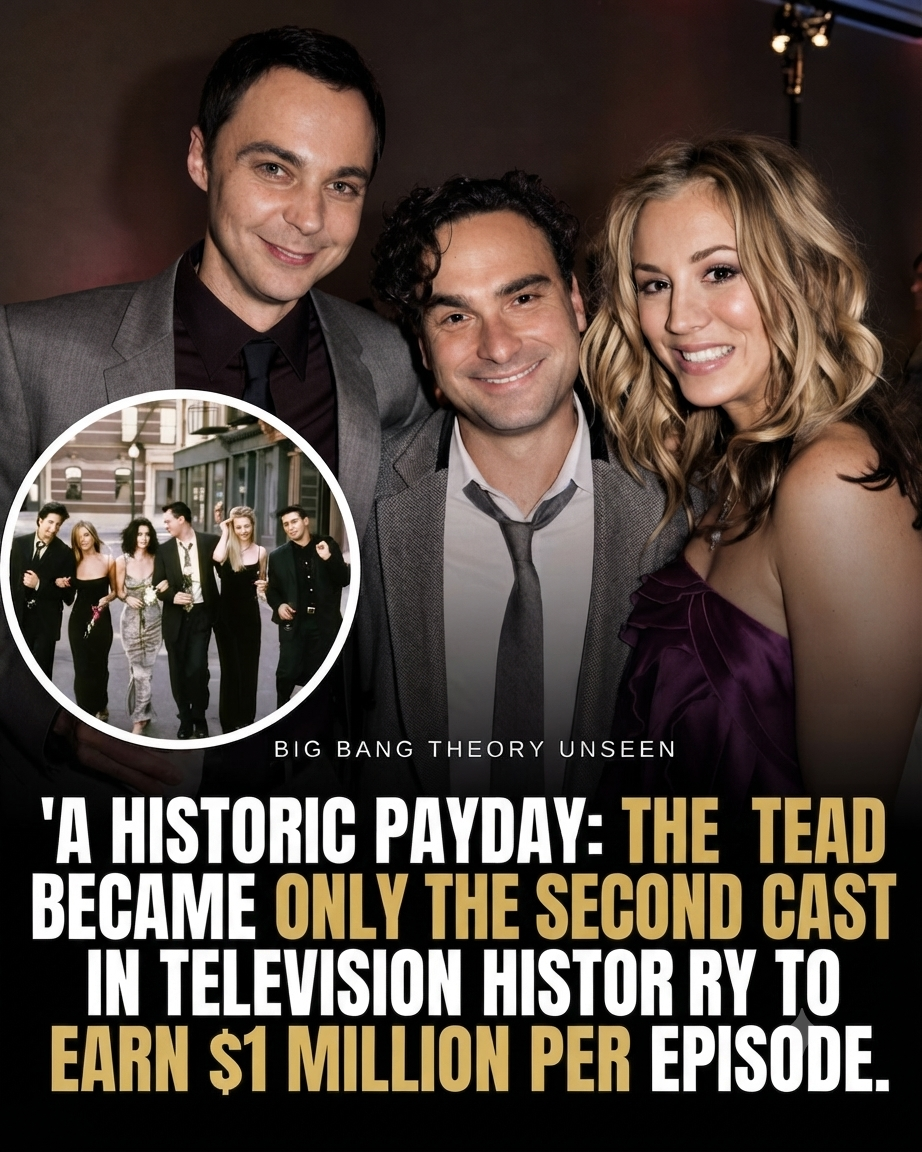
One of television's most remarkable financial milestones belongs to just two sitcoms: Friends and The Big Bang Theory.
At the height of The Big Bang Theory's popularity, Jim Parsons, Johnny Galecki, and Kaley Cuoco each reached an extraordinary salary of $1 million per episode.
It was a figure so rare that only one other sitcom had achieved it before.
Friends Made Television History First
In 2002, the six stars of Friends—Jennifer Aniston, Courteney Cox, Lisa Kudrow, Matt LeBlanc, Matthew Perry, and David Schwimmer—became the first television ensemble to negotiate salaries of $1 million per episode.
Their success wasn't simply about popularity.
The cast negotiated together rather than individually, using their collective value to secure one of the most famous television contracts in entertainment history.
That landmark deal forever changed expectations for sitcom stars.
The Big Bang Theory Reached the Same Milestone
More than a decade later, The Big Bang Theory entered that same exclusive club.
Jim Parsons, Johnny Galecki, and Kaley Cuoco each negotiated contracts worth $1 million per episode, reflecting the show's enormous ratings success and global popularity.
At the time, the sitcom had become one of the highest-rated comedies on television, making its leading trio among the industry's biggest stars.
The achievement placed them alongside the legendary Friends cast in television history.
More Than Just a Paycheck
The similarities between the two sitcoms went beyond the salary itself.
In both cases, the actors recognized that the show's success depended on the strength of the ensemble rather than any single performer.
That understanding gave the casts significant negotiating power with their networks during contract discussions.
It also highlighted just how valuable both series had become to their studios.
A Salary Few Shows Have Matched
Even years later, the $1 million-per-episode benchmark remains one of the rarest accomplishments in television.
Despite the growth of streaming platforms and blockbuster television budgets, very few sitcom actors have reached the same milestone.
That makes Friends and The Big Bang Theory part of an incredibly exclusive chapter in entertainment history.
No comments yet