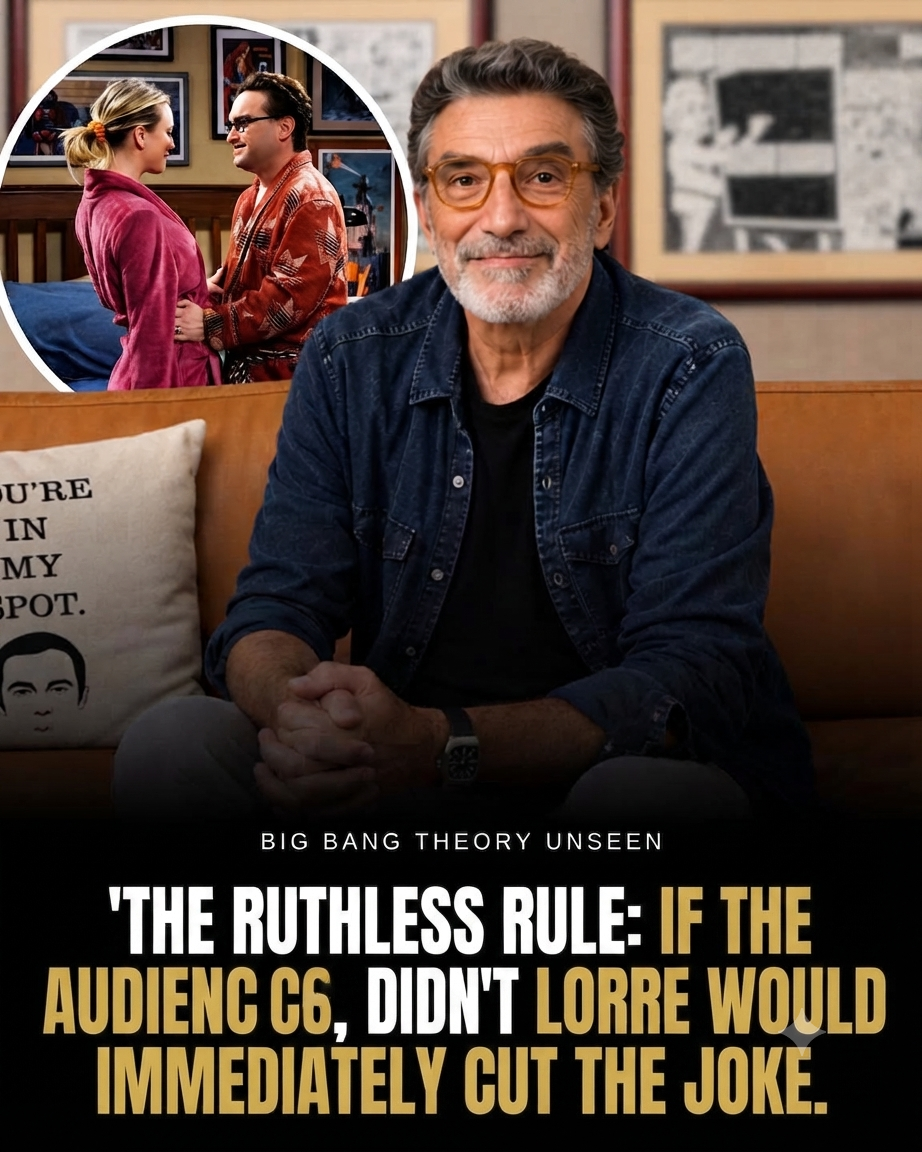
One of the biggest reasons The Big Bang Theory remained one of television's funniest sitcoms wasn't hidden in the script—it was sitting in the audience.
Every week, hundreds of fans filled the studio to watch the cast perform a brand-new episode live. Their laughter wasn't just there to create an enjoyable atmosphere. It became one of the most important creative tools available to co-creator Chuck Lorre and the writing staff.
Unlike many sitcoms that have faced criticism for relying on canned laughter or heavily edited audience reactions, The Big Bang Theory built its comedy around genuine responses from real people. If a joke landed, everyone in the room knew it instantly. If it didn't, the silence could bring production to a halt.
That willingness to let the audience influence the creative process became one of the show's greatest strengths and helped shape the polished comedy that millions of viewers watched each week.
A Live Audience Was Part of the Writing Team
From the very beginning, The Big Bang Theory embraced the traditional multi-camera sitcom format.
Episodes were filmed in front of a live studio audience after nearly a week of rehearsals, script revisions, and run-throughs. By the time taping day arrived, the cast had already spent days perfecting every movement, every line, and every joke.
But even then, the script wasn't considered finished.
Chuck Lorre viewed the audience as the final and most honest test.
The moment a joke was delivered, the room provided instant feedback. There were no surveys, no focus groups, and no delayed reactions.
There was only laughter—or the absence of it.
That immediate response told the writers everything they needed to know.
When the Audience Didn't Laugh, Production Stopped
Many fans assume television episodes are filmed exactly as they appear on screen.
In reality, The Big Bang Theory was far more flexible.
If a joke failed to generate the reaction the writers expected, production often paused while the creative team went back to work.
Instead of accepting the weak response, Chuck Lorre and his writers rewrote dialogue, adjusted punchlines, or replaced jokes altogether before filming continued.
It wasn't unusual for actors to receive updated pages during the taping itself.
The audience would then watch the revised version moments later.
If the new joke earned a bigger laugh, it stayed.
If not, the process could happen again.
This constant refinement ensured that viewers at home rarely saw material that hadn't already been tested in front of a real audience.
Chuck Lorre Called Silence "Horrifying"
For most television creators, silence during a comedy can be uncomfortable.
For Chuck Lorre, it was something even more significant.
He has openly described audience silence as "horrifying."
Not because it embarrassed the cast or writers, but because it instantly revealed a problem.
Silence meant the joke wasn't working.
Rather than blaming the audience or trying to force a laugh later through editing, Lorre believed the responsibility belonged entirely to the writers.
If something wasn't funny, it had to become funny.
That philosophy became one of the defining principles behind The Big Bang Theory's success.
No Fake Laughs to Rescue Weak Jokes
Over the years, many sitcoms have been criticized for using canned laughter to make scenes appear funnier than they actually were.
Chuck Lorre repeatedly rejected that idea.
In one of his well-known production vanity cards, he explained that the purpose was never to manufacture laughter through artificial sound effects.
Instead, the comedy itself needed to earn the audience's reaction.
If a scene received little response, the solution wasn't to add louder laughs later.
It was to improve the writing.
That commitment to authentic comedy gave The Big Bang Theory a level of confidence rarely seen in network sitcoms.
The production trusted audiences enough to let their honest reactions guide the creative process.
Even Real Laughter Was Sometimes Reduced
Ironically, The Big Bang Theory occasionally did the exact opposite of what many people assume.
Instead of adding laughter, the editors sometimes removed it.
During especially funny scenes, audience reactions could last so long that they covered important dialogue or disrupted the pace of the episode.
Rather than leaving every laugh intact, the production team carefully shortened some reactions during post-production.
The goal wasn't to exaggerate comedy.
It was to keep conversations flowing naturally and ensure viewers could clearly hear the actors.
This attention to rhythm helped preserve the show's fast-paced style while still allowing genuine audience laughter to remain an essential part of the viewing experience.
The Audience Helped Shape Every Episode
The people sitting in the studio weren't passive observers.
They became active participants in the creative process.
Their laughter influenced:
- Which jokes survived the final edit.
- Which punchlines were rewritten.
- The pacing of conversations.
- The timing of scene transitions.
- Occasionally, entire sections of dialogue.
In many ways, every audience attended a unique version of the episode.
Some jokes they heard never reached television.
Others were born only minutes before filming resumed after a rewrite.
That collaborative process gave the show an energy that couldn't easily be recreated on a closed set.
Why the Multi-Camera Format Worked So Well
By the time The Big Bang Theory premiered in 2007, single-camera sitcoms had become increasingly popular.
Shows without studio audiences offered greater cinematic freedom but lacked one important element: immediate feedback.
Chuck Lorre deliberately embraced the traditional multi-camera format because it allowed comedy to evolve in real time.
Actors could adjust performances based on audience reactions.
Writers could identify weak material instantly.
Even experienced performers fed off the crowd's energy, often finding new rhythms that made scenes even stronger.
The result was a sitcom that felt both carefully crafted and surprisingly alive.
One of Television's Smartest Creative Decisions
Looking back, it's easy to credit The Big Bang Theory's success to its talented cast, memorable characters, and sharp writing.
All of those factors certainly mattered.
But another key ingredient was the willingness to listen.
Chuck Lorre never treated the audience as background noise.
He treated them as collaborators.
Every laugh confirmed a joke worked.
Every silence highlighted an opportunity to improve.
That constant dialogue between performers, writers, and audience helped produce one of the most consistently successful sitcoms of the modern television era.
No comments yet