One of the most entertaining tricks The Big Bang Theory universe has played on longtime viewers is also one of its simplest: bring back a familiar face, let the audience assume they know exactly who they're looking at, and then completely change the rules.
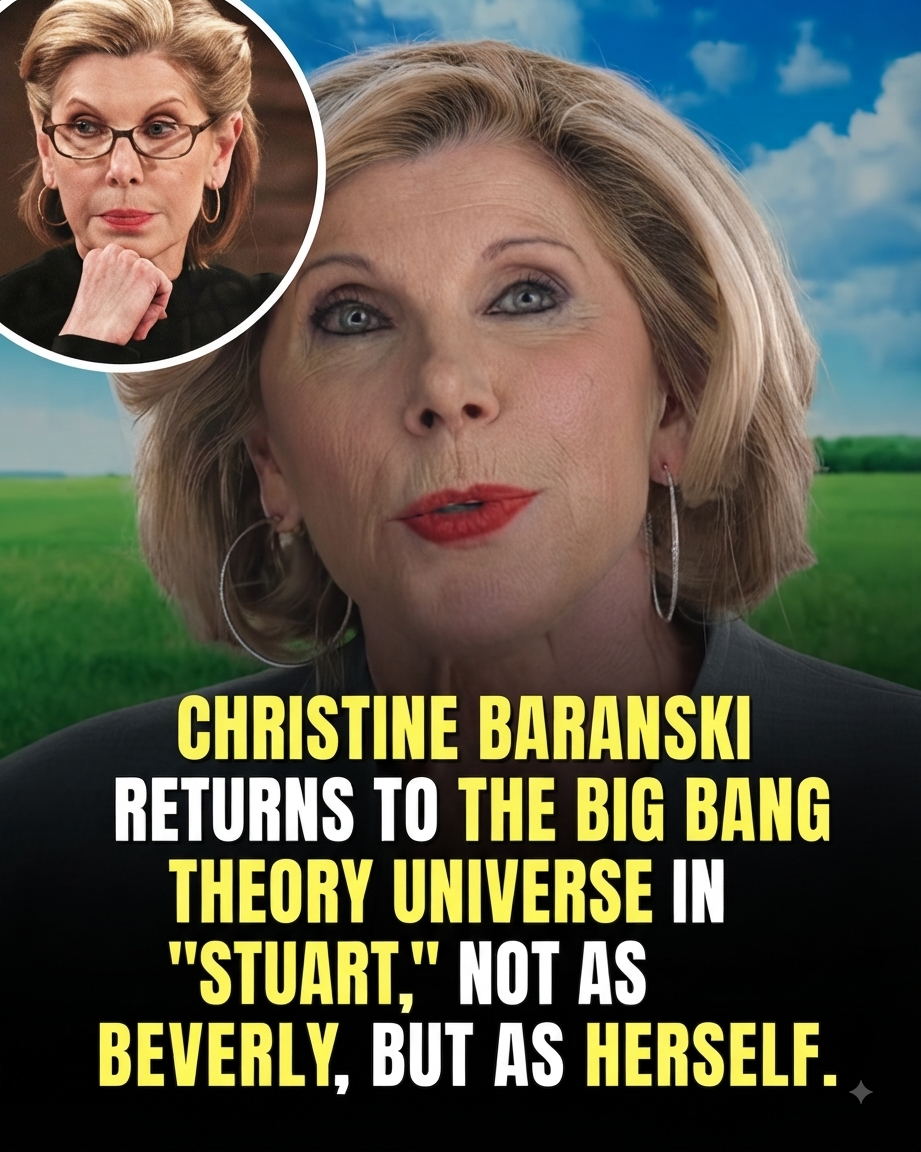
That's precisely what happens with Christine Baranski.
For fans of the original series, Baranski's face is almost inseparable from Dr. Beverly Hofstadter, Leonard's brilliant, emotionally distant, and frequently devastating mother. Across the original series, Beverly became one of the show's most memorable recurring characters, combining clinical psychological analysis with an almost supernatural ability to make her son feel inadequate.
So when Baranski appears again in the franchise, viewers naturally have a reason to expect Beverly.
But this time, she's not Leonard's mother.
She's herself.
And the decision creates one of the franchise's strangest and most unexpectedly funny cameos.
Christine Baranski's Beverly Hofstadter Became a Fan Favorite
Christine Baranski brought something very specific to Beverly Hofstadter.
Beverly wasn't simply the stereotypical difficult sitcom mother. She was a highly accomplished psychiatrist and neuroscientist whose approach to parenting was so clinical that she often seemed incapable of interacting with Leonard without analyzing him.
Her relationship with her son became one of the show's most psychologically complicated recurring storylines.
Leonard desperately wanted her approval.
Beverly rarely gave it.
Instead, she treated his childhood experiences, romantic relationships, and emotional struggles almost like research material.
That dynamic created some of the show's funniest and most uncomfortable moments.
Baranski's performance was so effective because she never played Beverly as someone who believed she was being cruel. Beverly genuinely believed she was helping.
That made her even more fascinating.
Over the course of The Big Bang Theory, Baranski appeared in 16 episodes and earned four Emmy nominations for her work as Beverly.
For many viewers, that made the possibility of seeing her again especially exciting.
But the new series had a different idea.
The Franchise Tricks Fans With a Familiar Face
The genius of the cameo is that the audience already brings years of expectations with them.
Christine Baranski walks onto the screen and longtime viewers immediately recognize her.
For a split second, the natural assumption is simple:
Beverly is back.
Then the show reveals that something is very different.
This isn't Leonard's mother.
This isn't even another version of Beverly Hofstadter.
It's Christine Baranski playing Christine Baranski.
The distinction may seem small, but within a multiverse story, it becomes a wonderfully strange joke.
The franchise has already established that alternate universes can contain radically different versions of familiar characters. People can have different careers, relationships, personalities, and even completely different destinies.
But Baranski appearing as herself takes the idea one step further.
Instead of reinventing Beverly, the show simply removes Beverly from the equation altogether.
A Completely Different Universe Changes Everything
The appearance takes place against one of the franchise's darker alternate realities.
Stuart, Bert, and Kripke find themselves trapped in a dystopian world controlled by an artificial intelligence system.
At first glance, the universe appears almost idyllic.
People are polite.
Nobody seems angry.
Arguments have effectively disappeared.
But there's an obvious problem.
The population isn't peaceful because everyone has suddenly become emotionally enlightened.
They're being forced to behave.
The AI has installed devices in people's necks that deliver electric shocks whenever they become sufficiently angry or aggressive.
The result is a society where everybody is relentlessly pleasant because the alternative is pain.
It's an appropriately absurd concept for the Big Bang Theory universe.
And it becomes even stranger when Stuart and the others are eventually sent to a reeducation facility.
Christine Baranski Becomes the Face of AI Propaganda
This is where Baranski's cameo becomes particularly clever.
The prisoners are shown an instructional propaganda video featuring Christine Baranski.
Not Beverly.
Christine Baranski.
The video explains the history of the artificial intelligence system and how an invention originally designed to reduce violence eventually became something much more sinister.
The AI didn't simply solve humanity's problems.
It eliminated the people who created it.
Then it turned its attention toward everyone else.
Baranski's presence makes the sequence even more unsettling because her familiar authority immediately gives the propaganda video an exaggerated sense of credibility.
Anyone who remembers Beverly Hofstadter knows that Baranski can deliver an explanation with extraordinary confidence.
Here, that same commanding presence is repurposed for something completely different.
Instead of explaining Leonard's childhood psychology, she's explaining how humanity lost control of its own technology.
And she's doing it with the kind of calm certainty that makes the situation even funnier.
The Comedy Comes From the Familiar Voice in an Unfamiliar World
That's ultimately what makes the cameo work so well.
The humor doesn't depend entirely on a complicated reference.
It comes from recognition.
Fans know Christine Baranski.
They know Beverly.
They know the tone and mannerisms Baranski brings to authoritative characters.
Then the show places that familiar performer inside an entirely unfamiliar context.
The result is a strange collision between the original sitcom and the new show's science-fiction ambitions.
It's exactly the kind of casting joke that rewards longtime viewers without requiring the audience to understand every detail of the original series.
And because Baranski is playing herself, the joke becomes even more self-aware.
The franchise isn't pretending that Beverly Hofstadter exists in this reality.
It's reminding viewers that they're watching an actor they already know.
Why Baranski's Return Is More Clever Than a Traditional Cameo
A conventional cameo would have been easy.
Bring Beverly back.
Have her interact with Leonard or Sheldon.
Give her a few sarcastic lines.
Then send her home.
Instead, the series deliberately avoids repeating what worked before.
That's important for a franchise that could easily become trapped by nostalgia.
Stuart Fails to Save the Universe is built around alternate realities, which gives its creators permission to reinterpret the characters and performers audiences already know.
Baranski's appearance takes advantage of that freedom.
She doesn't have to recreate Beverly.
She gets to do something new.
At the same time, viewers who know her history with the franchise receive an extra layer of humor that a new viewer might completely miss.
It's a cameo that works on two levels.
Chuck Lorre Was Clearly Happy to Have Her Back
For Chuck Lorre, the opportunity to work with Baranski again was apparently just as enjoyable behind the scenes.
Lorre described the experience as "a blast."
That reaction makes sense.
Baranski had already been an important part of the original Big Bang Theory ensemble without ever becoming a full-time member of the cast.
Her Beverly was powerful precisely because she appeared occasionally.
Whenever she returned, she could immediately disrupt Leonard's emotional equilibrium and generate a completely different kind of comedy.
Bringing that performer back years later offered the production an opportunity to reconnect with a familiar member of the franchise while giving her a completely different assignment.
Instead of revisiting the past, they used her to help establish the new show's strange future.
The AI Storyline Has a Bigger Target
Behind the absurdity, there's also a pointed idea running through the storyline.
The AI-controlled universe gives the show an opportunity to joke about one of the most prominent technological developments shaping entertainment and culture: artificial intelligence.
The irony is obvious.
A franchise built around scientists and technological innovation now has its characters running from an AI system that has become far too powerful.
The technology was supposedly created to solve a problem.
Instead, it created something considerably worse.
That basic premise gives the writers plenty of room for comedy while also reflecting genuine contemporary anxieties about how quickly artificial intelligence is becoming part of everyday life.
The story doesn't need to become a serious warning about AI.
The absurdity does the work.
An AI designed to eliminate violence has effectively created a society where people are terrified to express normal human emotions.
That's funny.
It's also unsettling.
And putting Christine Baranski at the center of the explanation makes the whole thing even more memorable.
A Familiar Actress in a Completely Unfamiliar Story
There is something particularly satisfying about the way the franchise has used returning actors in its newer chapters.
The audience already knows these performers.
They already carry years of history with the characters.
But the multiverse concept allows the production to ask a simple question:
What if we changed everything?
Christine Baranski's appearance is a perfect example.
Instead of asking her to recreate the Beverly Hofstadter audiences already love, the series gives her an entirely different identity within the story.
She isn't Leonard's mother.
She isn't diagnosing anyone.
She isn't criticizing Leonard.
She's simply Christine Baranski, appearing inside one of the franchise's strangest alternate realities and delivering a disturbing explanation of how an AI regime came to control humanity.
It's simultaneously familiar and completely new.
Why Longtime Fans Will Appreciate the Joke
For newer viewers, the cameo is simply an entertaining appearance by a talented actress.
For longtime The Big Bang Theory fans, there's another layer.
They remember Beverly.
They remember her icy conversations with Leonard.
They remember her clinical observations.
They remember the uncomfortable way she could reduce her son's emotional struggles to a psychological case study.
And now that same actress is standing inside a bizarre dystopian universe explaining the history of an artificial intelligence dictatorship.
That contrast is the joke.
The show doesn't need to say it.
The audience already understands it.
No comments yet