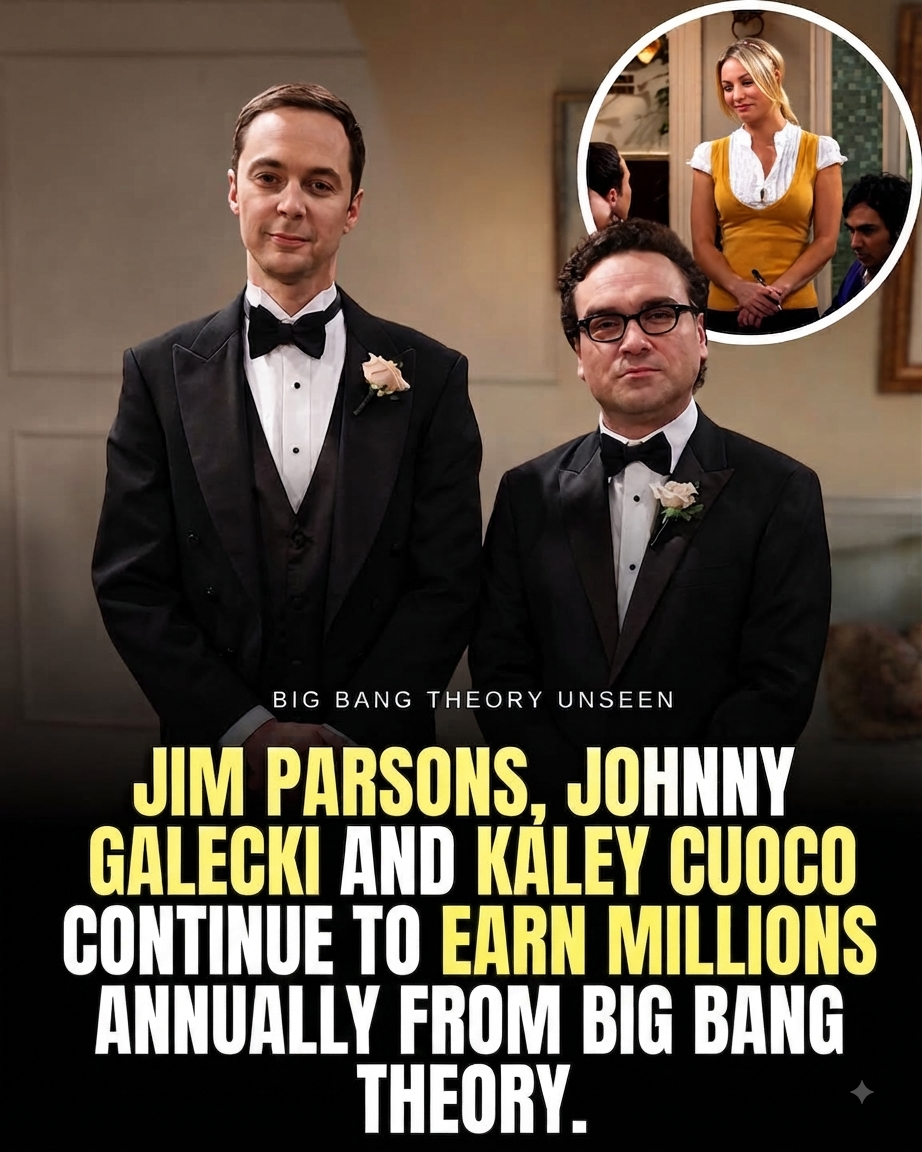
The Big Bang Theory may have ended in 2019, but for its biggest stars, the financial story didn't necessarily end with the final episode.
The sitcom remains one of television's most valuable comedy properties, continuing to generate revenue through syndication, international broadcasts, licensing arrangements, and streaming.
And because some of the show's biggest stars negotiated participation in the series' backend profits, the success of those reruns can potentially continue benefiting them years after they stopped filming.
For Jim Parsons, Johnny Galecki, and Kaley Cuoco, the decision to negotiate beyond their enormous episode salaries helped make their connection to the show's long-term success particularly significant.
The Three Stars Were Already Among Television's Highest Paid
During the later years of The Big Bang Theory, Parsons, Galecki, and Cuoco became three of the highest-paid actors on television.
At one point, each was reportedly earning around $1 million per episode.
With the sitcom producing more than 20 episodes in a typical season, those salaries represented extraordinary earnings before considering other forms of compensation.
But their contracts weren't limited to their episode fees.
The stars also negotiated backend participation in the show's profits, giving them a financial interest in the property's continuing success.
That distinction matters.
Because unlike a traditional salary, backend participation can potentially continue generating income when a successful television series remains commercially valuable long after production ends.
What Does Backend Participation Actually Mean?
The term can sound complicated, but the basic idea is relatively straightforward.
An actor's normal episode salary compensates them for performing in the production.
Backend participation, meanwhile, can give an actor a percentage or share tied to certain revenues or profits generated by the property, depending on the exact contract.
For a show that disappears after one season, such an arrangement may have limited value.
For a sitcom that remains popular for decades, however, it can become extremely significant.
The Big Bang Theory falls firmly into the second category.
Its episodes continue to circulate through television networks and streaming services around the world, keeping the series commercially relevant years after its finale.
The Show Didn't Stop Making Money in 2019
When The Big Bang Theory aired its final episode in May 2019, the characters' stories ended.
The business surrounding the show did not.
Successful sitcoms can have remarkably long commercial lives.
Episodes can be sold into syndication.
International broadcasters can license them.
Streaming services can acquire distribution rights.
Networks can continue airing reruns to audiences discovering the series for the first time.
And every new generation that discovers Sheldon, Leonard, Penny, Howard, Raj, Amy, and Bernadette can potentially increase the long-term value of the show's library.
That's one reason television studios place such enormous value on successful sitcom catalogs.
The Big Bang Theory Became a Television Library Powerhouse
Few sitcoms reach the level of longevity The Big Bang Theory achieved.
The series produced 279 episodes across twelve seasons, giving broadcasters and streaming platforms an enormous amount of content to work with.
That volume is particularly valuable in television because audiences can watch individual episodes repeatedly without needing to follow a complicated serialized storyline.
Someone can discover the show today and immediately watch an episode from Season 3.
Another viewer might jump into Season 8.
Someone else may simply watch familiar episodes during a late-night rerun.
That flexibility helps explain why sitcoms can remain valuable for decades.
But Exact Annual Earnings Are Not Publicly Confirmed
This is where some of the more dramatic claims surrounding The Big Bang Theory stars require caution.
Entertainment reports have frequently suggested that Parsons, Galecki, and Cuoco continue earning millions through the show's ongoing distribution.
Those estimates may sound plausible given the show's enormous success and the reported backend arrangements.
However, their current yearly earnings have not been publicly confirmed in detail by the actors or Warner Bros.
Their contracts are private.
That means specific claims such as "$10 million every year" or "$20 million annually" should be treated as industry estimates rather than established facts unless backed by an authoritative disclosure.
The broader point remains much easier to support: the stars negotiated financial participation in a hugely successful television property that continues generating revenue.
Why Syndication Is So Important
The beauty of a successful sitcom from a financial perspective is its ability to keep working after production ends.
The Big Bang Theory doesn't need a new episode every week to remain valuable.
Its existing episodes are the product.
Every rerun gives broadcasters another opportunity to attract viewers.
Every licensing agreement gives the studio another potential revenue stream.
Every streaming deal puts the series in front of another audience.
And unlike a movie that may have a relatively concentrated theatrical and home-video life, a television sitcom can continue circulating indefinitely.
That's what makes a successful sitcom library so valuable.
The Actors' Connection to the Show Goes Beyond Their Salaries
Parsons, Galecki, and Cuoco weren't simply highly paid performers appearing in an ordinary sitcom.
They became central figures in one of the defining television hits of their generation.
Sheldon Cooper became Parsons' signature role.
Leonard Hofstadter became inseparable from Galecki's television career.
And Penny became the character most closely associated with Cuoco's rise to international fame.
Their reported backend arrangements meant that their relationship with the series could potentially extend beyond the years they spent standing on the Apartment 4A set.
The show ended.
The business continued.
And so did their connection to it.
A Hit Sitcom Can Become a Long-Term Asset
This is perhaps the most fascinating part of The Big Bang Theory's financial legacy.
Producing a television show is an enormous investment.
But once a series becomes a proven hit, its completed episodes can become an increasingly valuable asset.
The show has already demonstrated extraordinary staying power.
Its characters remain recognizable.
Its episodes remain widely available.
And new viewers continue discovering the series long after its original broadcast run.
That's the kind of longevity that can turn a successful sitcom into something much bigger than a television program.
It becomes a library.
An asset.
And, for those who negotiated participation in its success, potentially a continuing source of income.
The Big Bang Theory's Financial Story Didn't End With the Finale
The final episode closed the story of Sheldon, Leonard, Penny, Howard, Raj, Amy, and Bernadette.
But it didn't close the business surrounding their world.
Jim Parsons, Johnny Galecki, and Kaley Cuoco reportedly secured backend participation during the show's later negotiations, giving them a potential financial connection to the series' continuing commercial success.
Exactly how much each actor earns today isn't publicly established.
But the broader reality is difficult to ignore.
The Big Bang Theory remains one of television's most enduring sitcom properties, and its continued presence in syndication and streaming ensures that its financial life extends far beyond its original twelve-season run.
Final Thoughts
Some television shows disappear almost immediately after their finales.
The Big Bang Theory was never going to be one of them.
With 279 episodes, a massive international audience, and characters that became part of popular culture, the sitcom built a legacy capable of continuing long after the cameras stopped rolling.
For Jim Parsons, Johnny Galecki, and Kaley Cuoco, that legacy reportedly includes backend financial participation in the show.
No comments yet