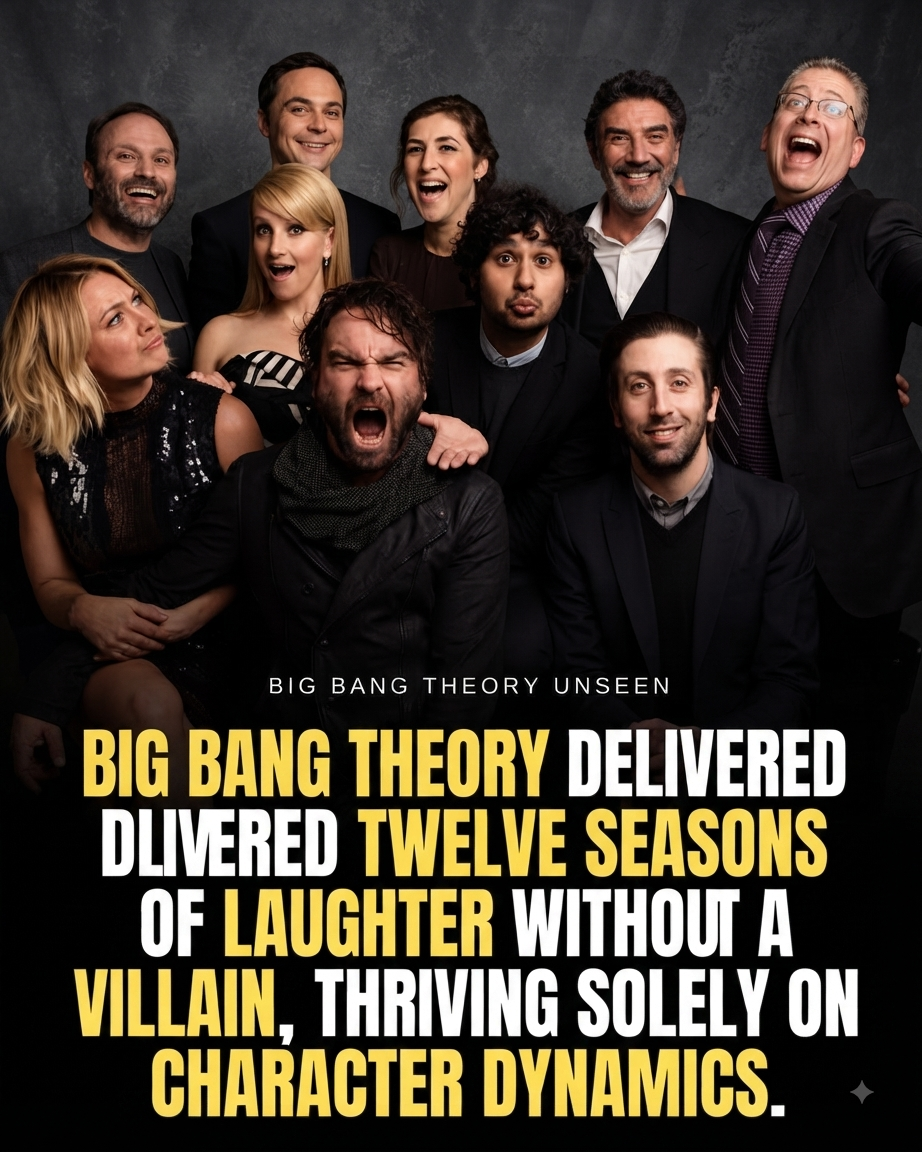
One of The Big Bang Theory's most impressive creative achievements was something the show almost completely avoided: the traditional sitcom villain.
Across twelve seasons and 279 episodes, the series rarely needed an obvious enemy to keep its stories moving.
There was no recurring mastermind plotting against the main characters. No evil boss constantly making their lives miserable. No permanent antagonist waiting around to sabotage relationships or careers.
Instead, The Big Bang Theory discovered something considerably more difficult.
It made its own characters the source of the conflict.
Not because they were bad people, but because they were imperfect people trying to understand one another.
Sheldon couldn't understand why other people didn't follow his logic.
Leonard constantly searched for reassurance.
Howard had to grow beyond his immature behavior.
Raj struggled with confidence and relationships.
Penny was constantly balancing the very different worlds she had become part of.
And Amy and Bernadette eventually brought their own personalities, ambitions, insecurities, and expectations into the group's increasingly complicated dynamic.
The comedy didn't require anyone to defeat anyone else.
It simply required these people to spend time together.
And somehow, that was enough for twelve seasons.
A Sitcom Without a Traditional Villain
Many television comedies rely on some form of external conflict.
A difficult boss can create workplace comedy.
A manipulative ex can create relationship drama.
A troublesome neighbor can become a recurring source of jokes.
An arrogant rival can give the main character someone to compete against.
The Big Bang Theory occasionally used these devices, but they were rarely the foundation of the series.
The show's central conflicts usually came from within the group itself.
That was important because it meant the characters didn't need to unite against a common enemy.
They were already connected.
Their relationships were the story.
When Sheldon behaved badly, the solution wasn't usually to defeat Sheldon.
It was to convince Sheldon to understand why his behavior was hurting someone.
When Leonard became insecure, nobody needed to destroy the person causing the insecurity.
Leonard had to confront his own need for validation.
When Raj struggled socially, the answer wasn't an external victory.
It was gradual personal growth.
The show constantly returned to the same basic idea:
These people care about each other, even when they drive each other crazy.
Sheldon Was Often His Own Worst Enemy
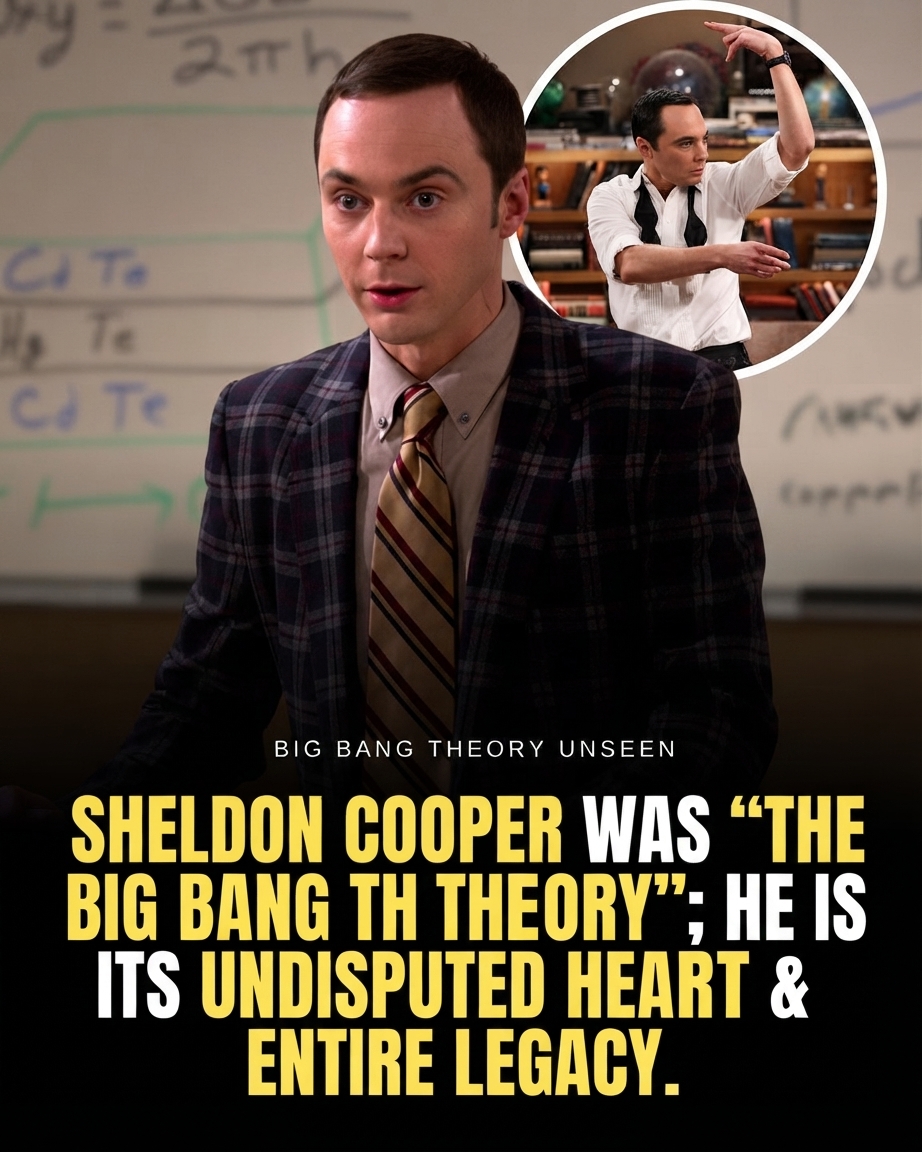
Sheldon Cooper is perhaps the clearest example of how The Big Bang Theory created conflict without needing a villain.
During the early seasons, Sheldon could easily have been written as an antagonist.
He was arrogant.
He was stubborn.
He was insensitive.
He routinely ignored social conventions.
He could insult his friends without understanding why they were offended.
He had extremely rigid expectations about his environment and the people around him.
But the show rarely treated Sheldon as someone the audience was supposed to hate.
Instead, it asked viewers to understand him.
That distinction became increasingly important as the series progressed.
Sheldon wasn't deliberately trying to hurt people most of the time.
He simply didn't understand people in the way his friends did.
His inability to recognize emotional boundaries created countless conflicts.
But those conflicts usually ended with communication, compromise, or some small step toward understanding.
That became one of the show's most successful recurring formulas.
Sheldon would do something completely unreasonable.
His friends would become frustrated.
Sheldon would eventually learn something.
And the group would move forward.
No villain needed.
Leonard's Insecurity Created Another Kind of Conflict
Leonard Hofstadter represented almost the opposite type of problem.
Where Sheldon was often too confident in his own perspective, Leonard frequently wasn't confident enough.
His childhood relationship with his mother, Beverly Hofstadter, contributed significantly to his lifelong search for approval.
That insecurity became particularly visible in his relationship with Penny.
Leonard often struggled to believe that someone like Penny could genuinely love him.
His intelligence never seemed to eliminate his self-doubt.
Instead, it sometimes made the insecurity worse.
He could understand complex scientific theories but struggle to understand why Penny wanted him.
That contrast produced some of the show's most relatable comedy.
Leonard's problems weren't caused by an evil character.
They came from his own emotional history.
And the people around him gradually helped him develop the confidence to move beyond it.
Penny Brought Two Worlds Together
Penny was another major source of the show's internal conflict.
When she first moved across the hall from Sheldon and Leonard, she represented a completely different world.
She wasn't a scientist.
She wasn't obsessed with comic books or theoretical physics.
She didn't understand the group's scientific conversations.
Her social life and interests were completely different from theirs.
That difference became the foundation of the show's original premise.
But Penny didn't remain an outsider.
Over twelve seasons, she became an essential member of the group.
She learned how her friends thought.
They learned how she thought.
And the differences that once separated them eventually became part of what made the friendship work.
Penny could make fun of Sheldon.
She could challenge Leonard.
She could understand emotional situations that completely confused the scientists.
And she could occasionally be just as stubborn as everyone else.
Her role wasn't to defeat the nerds or transform them into normal people.
She became part of their world without completely abandoning her own.
That was the point.
Howard's Story Was About Becoming a Better Person
Howard Wolowitz provides another fascinating example.
Early Howard could be arrogant, inappropriate, immature, and painfully insecure.
He frequently behaved in ways that made the other characters uncomfortable.
Yet the show didn't turn him into a permanent comic villain.
Instead, it gave him room to grow.
His relationship with Bernadette became one of the most important forces behind that transformation.
Marriage, family, professional achievements, and genuine friendship gradually changed Howard.
He became more responsible.
He became more emotionally mature.
He became a father.
He learned how to prioritize someone else's needs.
And perhaps most importantly, he became someone his friends could genuinely rely on.
The interesting part is that Howard didn't become a better character because someone defeated him.
He became better because he changed.
That is a fundamentally different approach to storytelling.
Raj's Greatest Battles Were Internal
Raj Koothrappali spent much of the early series struggling with his inability to speak comfortably to women.
His social anxiety created countless comedic situations, but underneath the jokes was a character who desperately wanted connection.
Raj frequently compared himself with his friends.
He worried about his career.
He worried about relationships.
He worried about being left behind.
Again, there was no villain responsible for all of this.
Raj's biggest obstacle was often Raj himself.
His insecurity could cause him to misinterpret situations.
His jealousy could make him behave irrationally.
His desire for romance could cause him to become overly invested in relationships.
But the show allowed him to grow through those experiences.
His journey wasn't about defeating somebody else.
It was about becoming more comfortable with himself.
Amy and Bernadette Changed the Group Dynamic
The introduction of Amy Farrah Fowler and Bernadette Rostenkowski also expanded the show's ability to generate conflict without traditional villains.
Amy brought her own expectations into her relationship with Sheldon.
She wasn't simply there to make Sheldon happier.
She challenged him.
She pushed him.
She expected emotional growth.
Bernadette did something similar with Howard.
She wasn't afraid to tell Howard when he was behaving badly.
She had her own career, ambitions, intelligence, and personality.
Both women made the group more complicated.
And that complexity created stories.
The characters didn't need enemies.
They had relationships.
Misunderstandings Became the Real Antagonist
Perhaps the best way to describe The Big Bang Theory is that misunderstanding itself became the show's unofficial antagonist.
Characters frequently wanted the same basic things:
To be respected.
To be loved.
To be understood.
To feel successful.
To belong.
But they didn't always know how to communicate those needs.
Sheldon could say something brutally insensitive while genuinely believing he was being logical.
Leonard could become jealous because he was afraid of losing Penny.
Raj could become competitive because he was insecure.
Penny could become frustrated because she felt her friends weren't listening.
Amy could become upset because Sheldon didn't understand what emotional intimacy required.
These situations created conflict without making anyone evil.
And because nobody was inherently evil, the resolution could be emotional rather than destructive.
The characters simply had to talk.
Sometimes badly.
Sometimes reluctantly.
Sometimes after making the situation considerably worse.
But eventually, they usually found their way back to one another.
Why This Made the Show Feel So Comfortable
This absence of traditional villainy may be one of the reasons The Big Bang Theory became such a comfort show for millions of viewers.
The stakes were rarely catastrophic.
Nobody was trying to destroy the world.
Nobody was permanently trying to ruin another character's life.
Even when relationships became complicated, the underlying assumption was usually that these people cared about one another.
That created a certain emotional safety.
Viewers knew that arguments would eventually end.
Friendships would survive.
Relationships could recover.
The characters might become frustrated with one another, but the group itself remained remarkably durable.
That reliability became part of the show's appeal.
You could return to the apartment, the cafeteria, the university, the comic book store, or the Cheesecake Factory and know that the same group of characters would still be there.
Conflict Without Cruelty
The Big Bang Theory certainly wasn't free from cruelty.
The characters mocked each other constantly.
Sheldon could be selfish.
Howard could be inappropriate.
Bernadette could be intimidating.
Penny could be dismissive.
Leonard could be passive-aggressive.
Raj could be jealous.
But the cruelty was generally contained within relationships that had genuine affection underneath them.
That distinction matters.
The characters could insult each other because the audience understood that they were friends.
The jokes weren't usually about destroying somebody.
They were about exposing personality differences.
The humor came from watching people who cared about one another struggle to coexist.
The Show's Greatest Conflict Was Growing Up
Ultimately, the biggest "antagonist" in The Big Bang Theory wasn't a person.
It was change.
The characters entered the series at different stages of emotional and professional development.
Over twelve seasons, they got older.
They fell in love.
They got married.
They changed careers.
They earned promotions.
They had children.
They experienced failures.
They became more confident.
They became more emotionally aware.
The show didn't need a villain because time itself created enough conflict.
People change.
Relationships change.
Priorities change.
And the characters had to figure out how to change without losing the friendships that had become central to their lives.
That became the deeper story underneath the jokes.
Why The Formula Worked for 279 Episodes
Creating hundreds of episodes without relying on a traditional antagonist is harder than it sounds.
Without an external villain, the writers needed to continually find new ways to make familiar personalities collide.
That meant developing characters rather than simply repeating their original traits.
Sheldon couldn't remain exactly the same forever.
Howard couldn't remain the same immature womanizer.
Raj couldn't remain completely dependent on alcohol to speak to women.
Penny couldn't remain simply the attractive neighbor from Nebraska.
Leonard couldn't remain permanently insecure.
Amy and Bernadette couldn't remain supporting characters forever.
The group had to evolve.
And that evolution created new forms of conflict.
The characters themselves generated enough story to sustain twelve seasons.
That is one of the show's most impressive achievements.
Final Thoughts
The Big Bang Theory didn't need a traditional villain because its writers had something more valuable: a group of characters whose personalities naturally created conflict.
Sheldon's rigidity.
Leonard's insecurity.
Penny's independence.
Howard's immaturity.
Raj's anxiety.
Amy's expectations.
Bernadette's determination.
Those characteristics could collide endlessly without requiring an evil mastermind behind the scenes.
And because the characters genuinely cared about one another, the conflicts usually ended with understanding rather than destruction.
That gave the series a remarkably warm emotional foundation.
The biggest battles weren't between heroes and villains.
They were between friends who didn't always know how to understand each other.
And perhaps that's why the show became such enduring comfort television.
There was no final villain to defeat.
No enemy waiting at the end.
Just a group of imperfect people learning, slowly and sometimes painfully, how to live with one another.
No comments yet