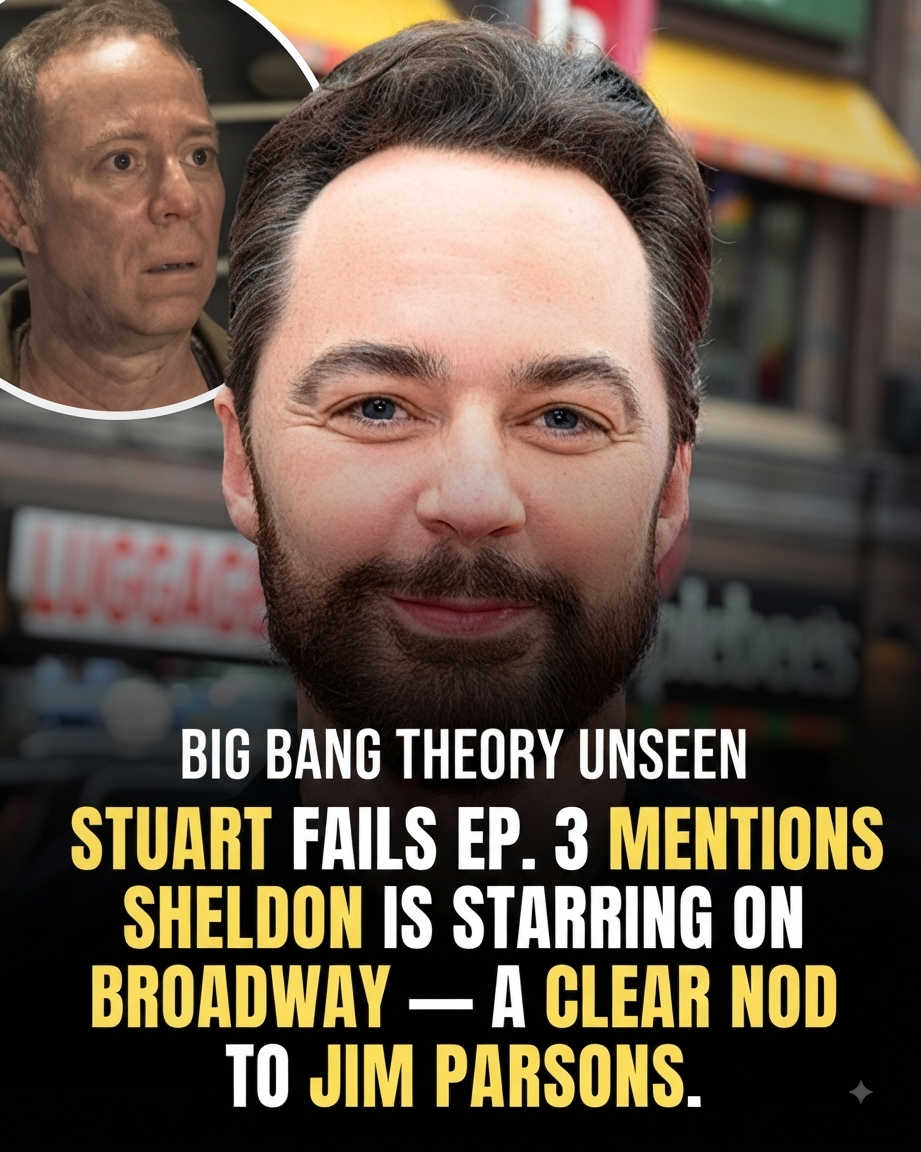
Sheldon Cooper has not appeared in Stuart Fails to Save the Universe.
And yet, almost from the beginning, his presence has been impossible to escape.
The entire multiverse adventure exists partly because of technology created by Sheldon, Leonard Hofstadter, and Howard Wolowitz. The device that sends Stuart Bloom and his increasingly bewildered companions tumbling between alternate realities is a direct reminder that even when Sheldon himself is nowhere to be seen, his scientific legacy continues to shape the story.
But the latest episode offered something even more entertaining: an actual glimpse into what Sheldon is doing in one of those alternate universes.
And, remarkably, he isn't doing physics.
He's doing Broadway.
The Sheldon We Know Is Still Everywhere
One of the cleverest ideas behind Stuart Fails to Save the Universe is that the original characters don't necessarily have to appear for their influence to be felt.
Stuart and his companions are effectively living inside the consequences of the work done by the original The Big Bang Theory scientists.
Sheldon, Leonard, and Howard built the device that ultimately becomes the center of the multiverse crisis. Their invention is responsible for sending the characters into realities where familiar people have completely different lives.
That gives the spinoff an unusual connection to its parent series.
The original characters don't need to walk through the door.
Their inventions, reputations, and alternate versions can do the work instead.
And nowhere is that more amusing than with Sheldon.
Because while the Sheldon Cooper audiences know spent twelve seasons obsessing over theoretical physics, one alternate version has apparently decided that science isn't his calling at all.
Welcome to the Universe Where Science Is Illegal
The revelation comes during one of the show's strangest alternate realities yet.
Stuart and Kripke find themselves trapped in a universe where magic works and science has been outlawed.
It's exactly the kind of world that Sheldon Cooper would consider a personal nightmare.
The entire premise turns the central philosophy of The Big Bang Theory upside down.
Instead of scientists being the smartest people in the room, scientific knowledge is something dangerous. Instead of physics explaining the universe, magic provides the answers.
For Stuart, however, the problem is much more practical.
They need to repair their device.
And finding someone capable of understanding the technology becomes considerably more difficult when the entire society has rejected science.
So, naturally, they start looking for answers wherever they can find them.
Then Alexa Appears
The episode's solution to their information problem is every bit as ridiculous as you'd expect.
Stuart and Kripke joke about asking Alexa for help.
And then Alexa actually appears.
Not a voice coming from a smart speaker.
Not an ordinary digital assistant.
A tiny, sarcastic demon named Alexa.
It's exactly the kind of bizarre visual joke that becomes possible when a Big Bang Theory spinoff decides to abandon the limitations of conventional sitcom reality and fully embrace the multiverse.
The characters can ask an impossible question.
An impossible creature can appear.
And somehow, the conversation still feels connected to the universe audiences already know.
“Where Is Sheldon Cooper?”
Naturally, once Stuart and Kripke have access to a seemingly all-knowing supernatural assistant, they ask the question that fans have been waiting to hear.
Where is Sheldon Cooper?
The answer is wonderfully unexpected.
Sheldon is unavailable.
But not because he's working on an experiment.
Not because he's hiding in a laboratory.
Not because he's trapped somewhere conducting theoretical calculations.
He's on Broadway.
More specifically, this version of Sheldon is starring in a Broadway revival of Man of La Mancha.
And suddenly, one of television's most famous fictional physicists has an entirely different career.
Sheldon Cooper, Broadway Star
The joke works because the alternate version is almost the exact opposite of what viewers would expect.
The Sheldon audiences spent twelve seasons watching was intensely devoted to science.
His identity was built around physics.
He valued intellectual achievement above almost everything else. His professional ambitions were so central to his personality that even his relationships often became secondary to his research.
The idea of Sheldon simply abandoning that life for musical theatre is therefore hilarious.
But that's exactly what makes the multiverse concept so useful.
In another reality, Sheldon doesn't have to be Sheldon in the way audiences understand him.
He can make completely different choices.
He can develop completely different ambitions.
He can become the person who might have existed if one tiny decision in his life had gone differently.
And apparently, somewhere out there, that person wanted the stage.
Why Man of La Mancha Is Such a Perfect Choice
The specific production Sheldon is starring in makes the joke even better.
Man of La Mancha is a classic musical built around the story of Don Quixote, the idealistic character who sees the world differently from everyone around him.
That's almost an accidental description of Sheldon Cooper.
Sheldon has spent his entire life looking at reality through his own highly specific intellectual framework.
He routinely interprets ordinary situations differently from the people around him. He insists on his own understanding of the world, even when everyone else thinks he's being ridiculous.
So while Broadway Sheldon is obviously a radically different character, the choice of Man of La Mancha still carries a strange thematic connection.
Maybe this version of Sheldon didn't abandon being Sheldon completely.
Maybe he simply found a different stage on which to be difficult.
Bill Prady Confirms the Alternate Reality
The most important part of the joke is that the alternate Sheldon isn't merely a throwaway reference.
When co-creator Bill Prady was asked whether this universe's Sheldon had genuinely abandoned theoretical physics for acting, the answer was essentially yes.
In this reality, Sheldon is a Broadway performer.
That's the beauty of the multiverse premise.
The writers aren't required to preserve every character's established career, relationship, personality trait, or life path.
They can take one familiar name and ask an entirely different question:
What if?
What if Sheldon had never become a physicist?
What if Leonard never met Penny?
What if Howard never married Bernadette?
What if Raj's life had gone in a completely different direction?
The possibilities are effectively infinite.
And the spinoff is finally taking advantage of that freedom.
The Sheldon We Know Still Matters
There is another reason this revelation works so well.
Even though this Sheldon is completely different, the original Sheldon remains essential to the story.
The device causing all this chaos was created by the original characters.
That means the multiverse disaster itself is partly a consequence of their scientific work.
Sheldon doesn't need to appear physically because his fingerprints are already on the entire story.
It's a clever way of acknowledging the original series without turning the spinoff into a parade of unnecessary cameos.
Instead of asking, “Where is the original Sheldon?”
The show asks something much more interesting:
How many Sheldons are there?
And what did they become?
A Universe Where Sheldon Is Finally a Performer
There is also something strangely satisfying about imagining Sheldon on a Broadway stage.
The original character spent years performing his own version of social interaction anyway.
He rehearsed conversations.
He memorized social rules.
He insisted on routines.
He approached relationships almost like experiments.
In a bizarre way, acting might actually suit him.
The difference is that Broadway would require something Sheldon historically struggled with: surrendering control.
He would have to follow a director.
He would have to work with an ensemble.
He would have to perform according to someone else's interpretation.
He would have to sing.
He would have to accept applause from strangers.
And, presumably, he would have very strong opinions about every one of those things.
The comedy practically writes itself.
The Best Part Is That We May Never See Him
Perhaps the smartest part of the reveal is that the show doesn't necessarily need to bring this alternate Sheldon onto the screen.
Simply knowing that he exists is enough.
The audience gets to imagine him.
Sheldon Cooper, somewhere in another reality, wearing a costume, standing under Broadway lights, delivering lines from Man of La Mancha while the universe's Stuart Bloom desperately searches for someone capable of repairing a device built by a completely different version of Sheldon.
That's funny precisely because it is so absurd.
And because it would have been almost impossible to do on The Big Bang Theory itself.
The Multiverse Has Completely Freed the Franchise
The Big Bang Theory was fundamentally grounded in a recognizable world.
There were apartments, laboratories, restaurants, universities, comic-book stores, and the occasional trip into space.
Stuart Fails to Save the Universe has no such obligation.
It can move from Pasadena to a dystopian dictatorship, from scientific realities to magical kingdoms, and from familiar characters to completely transformed versions of them.
That freedom allows the writers to explore ideas that would have been impossible within the original sitcom.
A wizard Bernadette.
A tyrannical Kripke.
An alternate Raj.
And now a Broadway Sheldon.
The characters we knew are becoming raw material for entirely new stories.
Final Thoughts
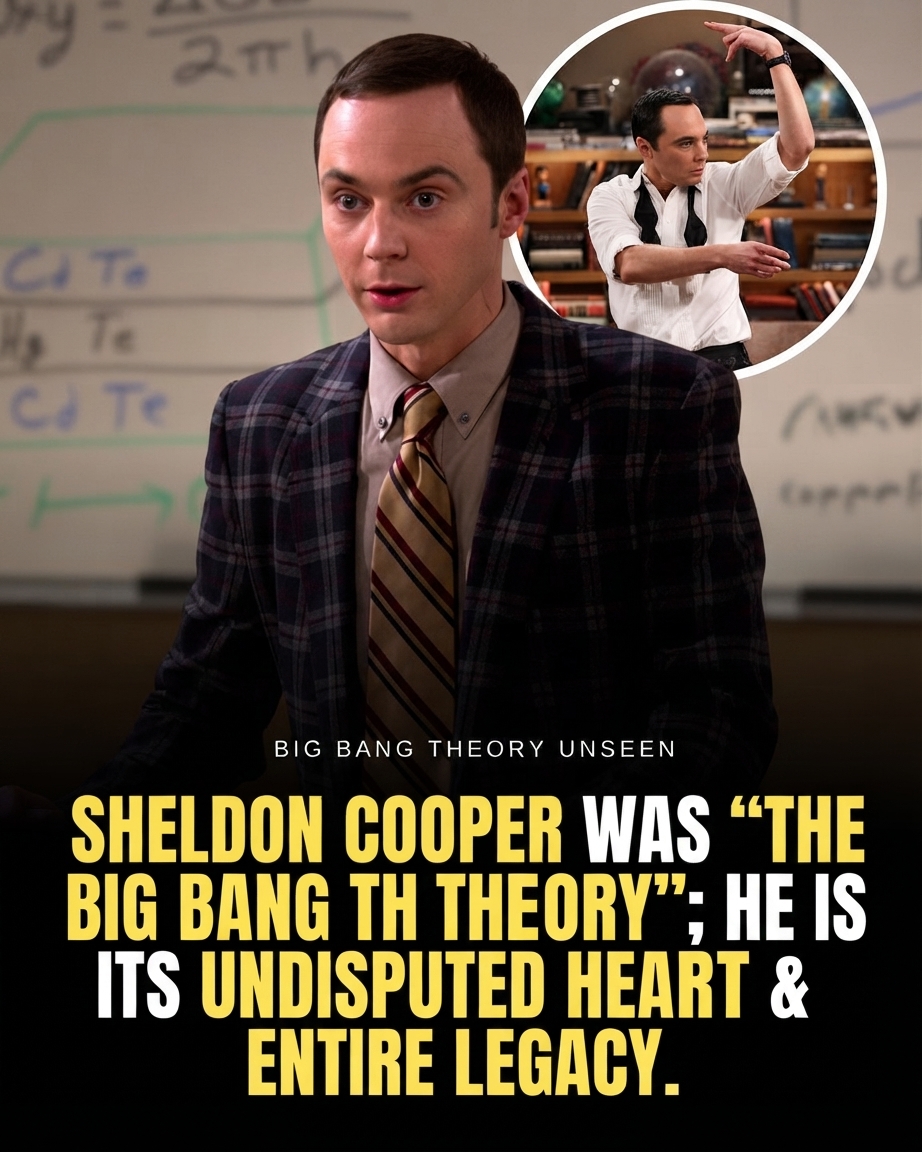
Sheldon Cooper may not have physically appeared in Stuart Fails to Save the Universe, but his presence continues to hang over the entire franchise.
His inventions created the problem.
His alternate versions create new possibilities.
And now we've learned that somewhere in the multiverse, Sheldon Cooper abandoned theoretical physics and became a Broadway star.
It's exactly the kind of detail that makes the spinoff feel genuinely different from its predecessor.
The original Big Bang Theory asked what happens when brilliant scientists try to navigate ordinary life.
Stuart Fails to Save the Universe is asking a much stranger question:
What happens when those same people are given infinite versions of themselves?
Apparently, one Sheldon becomes a Nobel Prize-winning physicist.
Another becomes a Broadway performer.
And somewhere out there, there are probably millions more we haven't met yet.
The universe is infinite.
Apparently, so are the possible careers of Sheldon Cooper.
No comments yet